Stay Tuned with our Daily Updates
Get the latest news on upcoming technological trends.
Node.js in 2027: Best Practices for Scalable Backends
A backend team at a mid sized fintech company recently ran into a strange problem. Their API worked fine in testing, handled a few hundred requests a minute without any trouble, and then fell apart the moment a marketing campaign sent real traffic to the app. The database connections ran out, the event loop got stuck behind a slow synchronous function, and support tickets started piling up. Nothing about their code was wrong in the textbook sense. It just was not built with scale in mi...

Nidhi Jain
Next.js and the Vercel AI SDK: Building AI-Powered Web Apps
A product team at a mid sized company rebuilt their support widget twice in one year. The first version was a plain React app that called an AI model straight from the browser. It worked fine in a demo, then broke once real traffic hit it: slow replies, an API key sitting in the browser console for anyone to copy, and a support page that Google could not read because the content only appeared after JavaScript finished running. The second rebuild used Next.js and the Vercel AI SDK, and ...

Prachi Singh
NestJS vs Express: Which Node.js Framework Should You Hire For?
Every Node.js hiring decision eventually runs into the same fork in the road: Express or NestJS. One framework has been running production servers since 2010. The other arrived in 2017 promising structure and discipline, and it has since become the default choice for larger TypeScript teams. The framework you pick affects who you interview, how fast a new hire becomes productive, and how much cleanup a growing codebase will need a year from now.This guide walks through what each framew...

Ayush Kanodia
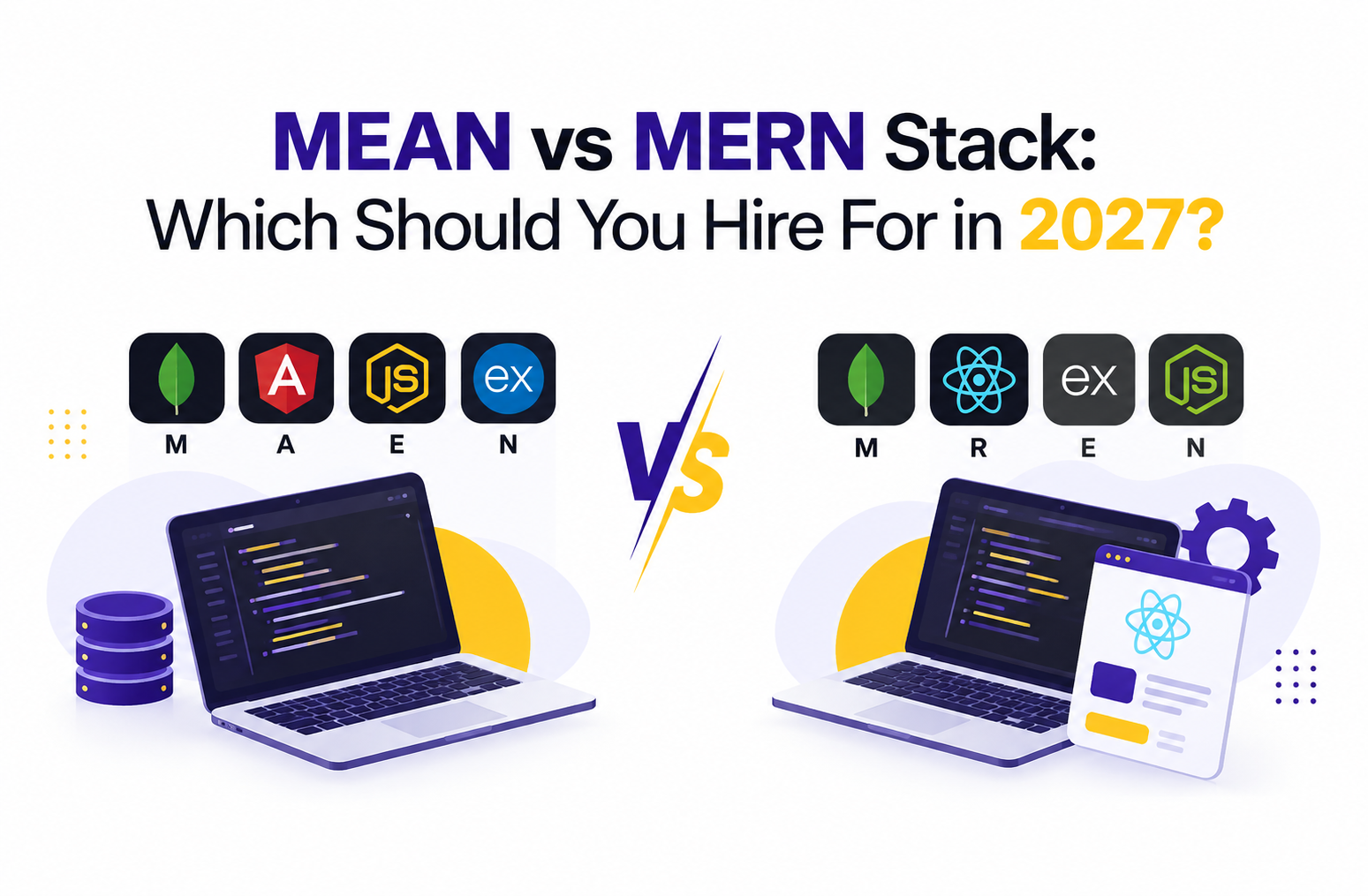
MEAN vs MERN Stack: Which Should You Hire For in 2027?
If you are staffing a full stack JavaScript team this year, you have almost certainly run into these two names again and again: MEAN and MERN. Both stacks run on MongoDB, Express, and Node on the backend, and both let your whole team write JavaScript from the browser down to the database. The one piece that changes is the frontend framework, Angular for MEAN and React for MERN, and that single swap ends up changing how you hire, how fast your team ships feature...

Nainesh Pandya
MATLAB vs Python for Engineering Simulations: What to Choose
Engineers picking a language for simulation work usually land on the same two names within the first few minutes of research: MATLAB and Python. Both can run a finite element model, both can solve a system of differential equations, and both show up in job postings for control systems, robotics, and product design. The confusion is not that one tool is broken and the other works. The confusion is that both work well, just for different reasons, and the choice that suits a control syste...
Nidhi Jain
LangChain in 2027: Is It Still the Best LLM Framework?
Three years ago, if you wanted to build anything with a large language model, you probably started with LangChain. It was the framework everyone learned from, the one every tutorial used, and for a lot of developers it was the first real introduction to building with AI. So the question is LangChain still relevant in 2027, and does it deserve the same spot at the top of every new project, is worth asking honestly instead of just repeating what was true in 2023.The short answer is ...
Prachi Singh
Kubernetes in 2027: Best Practices for Cost-Efficient Scaling
Ask any platform engineer what changed about Kubernetes over the past two years and you will get some version of the same answer: it got bigger, and it got more expensive. Clusters that once ran a handful of microservices now carry AI inference workloads, batch jobs, internal tools, and half a dozen side projects nobody remembers approving, and the cloud bill grew right along with them. Talking about Kubernetes in 2027 without talking about cost is a bit like reviewing a car without me...
Ayush Kanodia
Is Scala Still Worth Learning in 2027? A Guide for Businesses Hiring
Every year, someone declares Scala dead. Every year, fintech firms, streaming platforms, and big data teams keep listing it in job postings anyway, often at salaries higher than almost any other backend language. Both things are true at once, and untangling them is what this guide is for.If you are a founder, CTO, or hiring manager trying to decide whether to greenlight a Scala project, approve a Scala hire, or move an existing Spark pipeline away from it, you need more than a three ye...
Nainesh Pandya
Is Ruby on Rails Still a Good Choice for Startups in 2027?
Every couple of years, a founder asks the same question in a different phrasing: is Ruby on Rails still relevant 2027, or has it finally been pushed aside by newer stacks. The question shows up on Hacker News threads, in private Slack channels between CTOs comparing notes, and in the quiet moments before a team writes its first line of code. It is a fair question to ask. Rails has been around since 2004, which in web development years puts it closer to established infrastructure than t...
Nidhi Jain
Is PHP Still Worth Hiring For in 2027? A Business Owner's Guide
A founder messaged us last month with a simple question. His agency had quoted him a Laravel build, but his cousin, who works at a startup, told him PHP was on its way out and he should ask for Node.js instead. He wanted to know who was right before he signed a contract worth a good chunk of his budget.That question comes up often enough that it deserves a proper answer instead of a quick opinion. Is PHP still relevant in 2027? The short version is yes, for most of the projects sm...
Prachi Singh