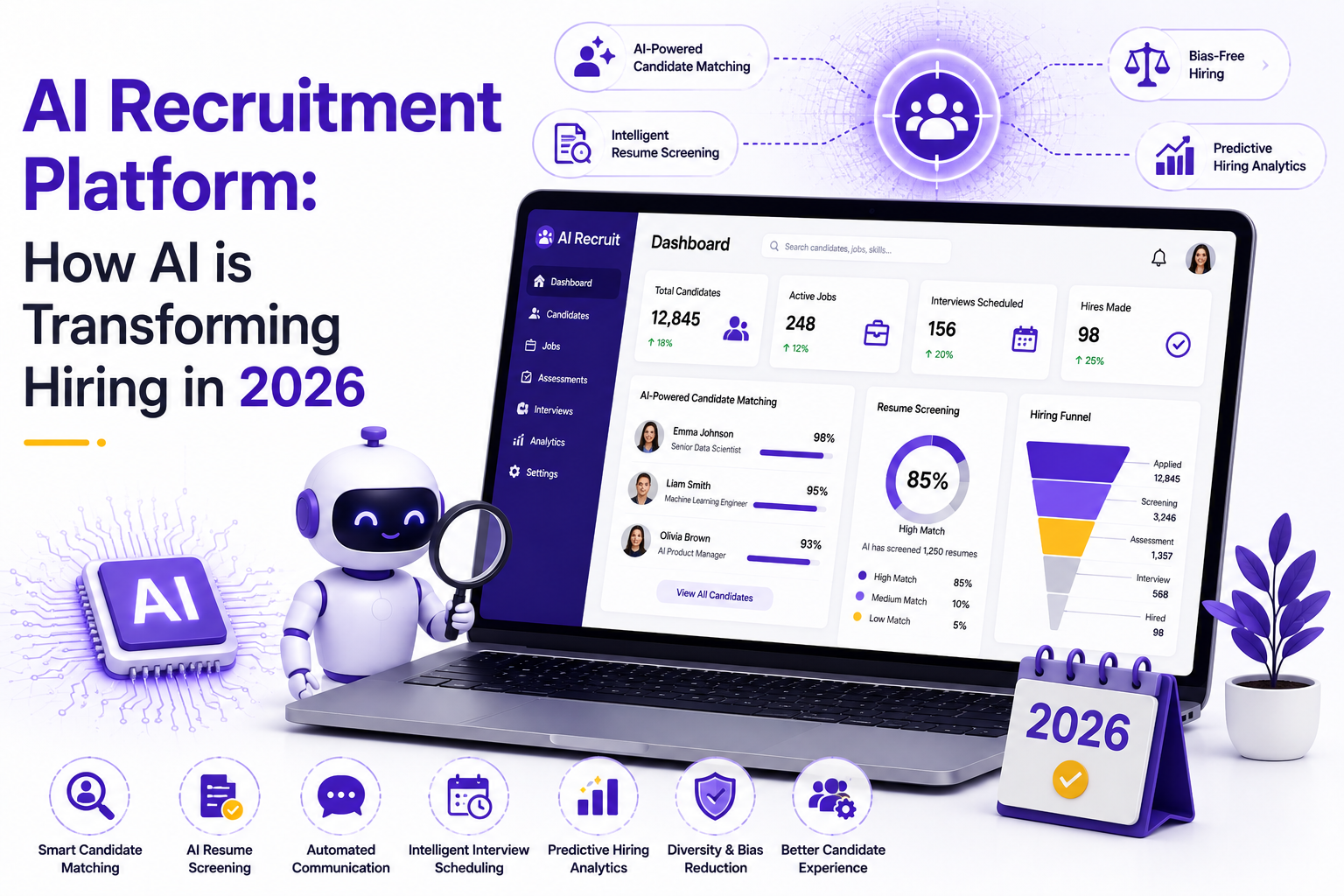

Ask any founder how they spent their week and hiring will probably come up before product roadmaps or fundraising updates do. It just eats time. You post a role, three hundred resumes show up by Friday, and somehow you still can't find the one person who actually fits. That gap between "we need to hire" and "we finally hired someone good" has quietly become one of the most expensive problems in business.
By 2026, a lot of companies have stopped treating this as a people problem alone and started treating it as a technology problem too. That's where an AI recruitment platform comes in. It's not about replacing recruiters or making hiring feel robotic. It's about giving your team the kind of speed and clarity that used to take a much bigger HR department to achieve. If you're a CEO or founder weighing whether this shift is worth your attention, this is exactly the conversation you need to have right now.
Signs Your Company Is Actually Ready for This Shift
Not every company needs to jump on this immediately, and it's worth being honest about that. If you're hiring two or three people a year, a spreadsheet and a good recruiter will serve you fine. But there are some clear signals that tell you it's time to look seriously at an AI recruitment platform.
If your team is spending more hours screening resumes than actually talking to strong candidates, that's a sign. If good applicants are slipping through the cracks simply because nobody got around to reviewing their resume in time, that's another. And if you're scaling headcount quickly, maybe doubling your team in a year, doing that manually usually means quality slips somewhere, even with the best intentions.
There's also a cultural signal worth paying attention to. If your hiring managers keep complaining that the candidates they interview don't match what was promised on paper, the screening stage is probably the weak link, and that's exactly where these tools tend to help the most.
Why Hiring Needed a Reset
Traditional hiring was built for a slower world. Job boards, manual resume screening, endless email threads with hiring managers, it all made sense when companies hired a handful of people a year. It doesn't hold up when you're scaling fast, hiring across time zones, or trying to fill a technical role before your competitor does.
A few things pushed hiring toward a breaking point. Remote work widened the talent pool so much that a single job posting can pull in candidates from a dozen countries. Skills started changing faster than job descriptions could keep up. And candidates themselves got pickier, often abandoning applications that take too long or feel impersonal.
An AI hiring software doesn't fix every one of these problems on its own, but it removes the bottlenecks that used to slow everything down. Resume screening that took a recruiter three days can now happen in a few hours. Scheduling that used to involve fifteen back and forth emails can happen automatically. The result isn't just faster hiring, it's hiring that actually keeps pace with how fast your business needs to move.
What Exactly Is an AI Recruitment Platform
At its core, an AI recruitment platform is software that uses machine learning and natural language processing to handle the heavy lifting in hiring, sourcing candidates, screening resumes, ranking applicants, scheduling interviews, and sometimes even conducting the first round of conversation through a chatbot or voice assistant.
Think of it less like a single tool and more like a layered system. There's usually a sourcing engine that scans job boards, LinkedIn, and internal databases. There's a screening layer that reads resumes and matches them against the role's real requirements, not just keyword overlap. And there's an engagement layer that keeps candidates updated so they don't ghost you out of frustration.
What makes this different from the applicant tracking systems companies used a decade ago is the intelligence behind it. Older systems were basically filing cabinets with search bars. A modern AI recruitment platform actually understands context. It can tell the difference between someone who listed "Python" once on a resume and someone who genuinely built production systems with it.
Core Capabilities of Modern AI Hiring Software
If you're evaluating tools, it helps to know what's actually happening under the hood. Here's what most serious platforms offer in 2026.
Resume Screening That Understands Nuance
Gone are the days of simple keyword matching. Good AI hiring software reads resumes the way a thoughtful recruiter would, looking at career progression, relevant achievements, and how closely someone's actual experience maps to the role, rather than just scanning for buzzwords.
Candidate Matching and Ranking
Instead of a flat pile of applicants, you get a ranked shortlist based on fit. Some platforms even explain why a candidate was ranked where they were, which makes it easier for hiring managers to trust the output instead of treating it like a black box.
Automated Interview Scheduling
This sounds small until you've lived through the alternative. Automated scheduling alone can shave days off a hiring process, especially when you're coordinating across multiple interviewers and time zones.
Chatbot and Conversational Screening
Many platforms now include AI chat assistants that handle initial candidate questions, collect basic information, and even conduct structured first-round interviews. Candidates get instant responses instead of waiting a week to hear back, which noticeably improves how they feel about your company.
Bias Reduction Tools
This one matters more than most founders realize. A well-built AI recruitment platform can be configured to focus purely on skills and experience, reducing the influence of factors that shouldn't matter in a hiring decision. It's not a perfect solution, and it requires careful setup, but it's a meaningful improvement over relying entirely on individual judgment.
Predictive Analytics
Some tools go a step further and try to predict things like time to hire, likelihood of acceptance, or even early signs of retention risk based on historical hiring data. This is where hiring starts to feel less like guesswork and more like a data driven decision.
Diversity Sourcing and Talent Pool Expansion
A number of platforms now include tools specifically designed to widen the pipeline, surfacing candidates from underrepresented backgrounds or non-traditional career paths who might otherwise get filtered out by rigid keyword requirements. This isn't just a compliance checkbox either. Companies that broaden their sourcing tend to find stronger candidates simply because they're looking in more places than their competitors are.
Integration With Existing HR Systems
None of this matters much if the software sits in isolation. The better platforms plug directly into your existing applicant tracking system, payroll software, and communication tools like Slack or email, so information flows automatically instead of requiring someone to copy and paste data between five different tabs.
How AI Recruitment Platforms Are Changing the Hiring Funnel
It helps to walk through the funnel stage by stage, because the impact isn't the same everywhere.
Sourcing
Instead of recruiters manually searching job boards, the software actively scans multiple sources and pulls in candidates who match the role, including passive candidates who aren't actively job hunting but fit the profile well.
Screening
This is usually where founders notice the biggest time savings. What used to take a recruiter a full day now takes minutes, and the shortlist that comes out the other end is usually more consistent than one built by a tired hiring manager working through resume number 200.
Interviewing
Structured, AI-assisted interviews mean every candidate gets asked comparable questions, which makes comparing candidates fairer and easier. Some platforms also transcribe and summarize interviews automatically, so hiring managers spend less time writing notes and more time actually evaluating people.
Offer and Onboarding
Even after a hire is made, the smarter platforms help draft offer letters, manage onboarding checklists, and keep new hires engaged during that awkward gap between accepting an offer and their first day.
Reporting and Team Alignment
Once a hire is finalized, the better platforms don't just close the loop and move on. They generate reports that hiring managers and founders can actually use, showing where candidates came from, how long each stage of the process took, and where the funnel lost people. This kind of visibility makes it much easier to have a real conversation with your leadership team about whether hiring is actually working, instead of relying on impressions from whoever happened to be involved in the last few interviews.
Real Benefits for CEOs and Founders
You're not evaluating this technology because it's trendy. You're evaluating it because hiring decisions directly affect your runway, your culture, and your ability to execute. Here's what actually moves the needle.
Faster Time to Hire
Every extra week a role stays open costs you in lost productivity and in the risk of losing your top candidate to a competitor who moved faster. An AI recruitment platform typically compresses time to hire by automating the slowest parts of the process.
Lower Cost Per Hire
Recruiter hours are expensive, especially at a growing company where every hire matters. Automating screening and scheduling frees up your team to focus on the parts of hiring that genuinely need a human touch, like final interviews and negotiation.
Better Quality of Hire
When screening is more consistent and less dependent on whoever happens to be reviewing resumes that day, you end up with candidates who are genuinely closer to what the role requires. Over time, this shows up in lower turnover and stronger team performance.
A Better Candidate Experience
Candidates notice when a process feels organized and respectful of their time. Fast responses, clear communication, and a smooth interview process all reflect on your brand, and in competitive hiring markets, that reputation matters as much as your salary offer.
Data You Can Actually Act On
Instead of relying on gut feeling about why a role took so long to fill, you get real numbers. Where candidates drop off, which sourcing channels actually work, how long each stage takes. That's the kind of information that helps you fix hiring problems instead of just complaining about them.
Stronger Employer Branding
Word travels fast among job seekers, especially in tighter knit industries where people talk to each other about how a company treated them during the interview process. A smooth, respectful, well communicated hiring experience becomes part of your reputation, and that reputation shapes who applies to your next opening before you even post it.
Build vs Buy: Should You Use an Off the Shelf Tool or Go Custom
This is usually the first real fork in the road once a founder decides to move forward. Off the shelf AI recruitment platform tools are faster to set up, typically priced on a subscription basis, and work well if your hiring process looks fairly similar to most other companies in your industry. You're paying for something proven, and you can usually be up and running within a few weeks.
Custom development makes more sense when your hiring process has specific quirks that generic tools don't handle well. Maybe you hire across multiple countries with different compliance requirements. Maybe your roles require unusual technical assessments that off the shelf platforms don't support out of the box. In situations like these, working with one of the established AI recruitment platform development companies to build something tailored to your workflow often ends up being the more sustainable choice, even though it costs more upfront.
A reasonable middle ground that a lot of growing companies land on is starting with an off the shelf platform to prove out the value quickly, then moving to a custom build once the specific gaps become obvious through actual use. That way you're not guessing at requirements before you've even seen how your team works with the tool day to day.
What to Look for When Choosing AI Recruitment Platform Development Companies
If off the shelf tools don't fit your workflow or your industry has specific compliance needs, building something custom starts to make sense. This is where AI recruitment platform development companies come into the picture, and choosing the right partner matters just as much as choosing the right features.
Relevant Experience, Not Just Portfolio Size
A long client list doesn't tell you much on its own. What you want to know is whether the team has actually built hiring systems before, understands the nuances of resume parsing, candidate matching algorithms, and integration with existing HR tools like your applicant tracking system or HRIS.
Understanding of Data Privacy and Compliance
Hiring data is sensitive. Candidate resumes contain personal information, and depending on where you operate, there are real legal requirements around how that data is stored, processed, and used in automated decision making. Reliable AI recruitment platform development companies will ask about compliance requirements early, not as an afterthought after the product is already built.
A Clear Development Process
Ask how they handle discovery, design, and testing. Do they build a working prototype before committing to the full build. Do they involve your hiring team in testing the matching algorithm before launch. The good ones will have clear answers, not vague reassurances.
Post Launch Support
An AI recruitment platform isn't a one and done project. Hiring needs change, job markets shift, and the algorithms behind matching need occasional tuning. Make sure whichever partner you choose offers ongoing support rather than disappearing after the handoff.
Transparent Pricing and Timelines
Custom development timelines vary quite a bit depending on complexity, but a rough range for a solid MVP typically falls somewhere between 3 to 6 months, with more advanced features extending that further. Be wary of anyone who promises something fully custom in a matter of weeks. That usually means corners are being cut somewhere.
How to Measure Whether It's Actually Working
Rolling out new technology without a way to measure its impact is a common trap. A few numbers give you a genuinely honest picture. Time to fill is the obvious one, tracking how many days pass between opening a role and getting a signed offer. Cost per hire tells you whether the efficiency gains are showing up in your budget the way they should. Offer acceptance rate matters too, since a platform that speeds up screening but produces candidates who keep turning down offers isn't actually solving your problem.
It's also worth tracking quality of hire over a longer window, looking at performance reviews and retention for people hired through the new process compared to your historical baseline. This takes patience, usually six months to a year before the data means much, but it's the number that ultimately tells you whether the AI recruitment platform you chose was worth the investment.
Common Mistakes Companies Make When Adopting AI Hiring Software
Even good technology fails when it's implemented poorly. Here are the mistakes founders run into most often.
Treating It as a Fully Automated Replacement for Recruiters
The best results come from AI hiring software working alongside your team, not instead of them. The software handles volume and repetitive tasks. Your recruiters handle judgment calls, relationship building, and the parts of hiring that genuinely need human nuance.
Skipping the Setup and Training Phase
These tools are only as good as the data and criteria you feed them. Rushing implementation without properly defining what a good candidate looks like for each role leads to disappointing results, and then people blame the software instead of the setup.
Ignoring Candidate Experience
Some companies get so focused on internal efficiency that they forget the candidate is on the other side of this process too. If your chatbot feels cold or your automated emails feel generic, you'll lose good candidates to companies that made the experience feel more human.
Not Auditing for Bias Regularly
Even well designed systems can drift over time if the underlying data has patterns you didn't anticipate. Regular audits of who gets shortlisted and who doesn't should be a standing item, not a one time check during setup.
Choosing Based on Price Alone
The cheapest option often ends up costing more in the long run through poor support, limited customization, or a system that simply doesn't scale with your hiring needs. This is another area where picking the right one of the many AI recruitment platform development companies on the market actually pays off.
Data Security and Ethical Considerations Worth Taking Seriously
Since an AI recruitment platform handles personal information for potentially thousands of candidates, security can't be an afterthought. Look for platforms that offer encryption at rest and in transit, clear data retention policies, and role based access so only the right people on your team can view sensitive candidate details.
There's also an ethical dimension that goes beyond legal compliance. Candidates are trusting you with their career history, and how that data gets used should be transparent. Good vendors will tell you plainly how their matching algorithms work, what data they train on, and how candidates can request their information be deleted. If a vendor is vague or dismissive about these questions, that's usually a red flag worth paying attention to before you sign anything.
It's also worth asking how the platform handles algorithmic drift, meaning how it prevents the system from developing unintended patterns over time as it processes more hiring decisions. The strongest AI recruitment platform development companies build in regular auditing as a standard feature rather than something you have to request separately.
The Future: What 2026 and Beyond Looks Like
Hiring technology isn't slowing down. A few trends are worth watching if you're thinking long term.
Voice based AI interviews are becoming more common, letting candidates go through a conversational first round without scheduling a live call. Predictive retention modeling is getting more sophisticated, giving hiring managers a sense of not just who's a good fit today, but who's likely to stay and grow with the company.
Integration is also becoming tighter. Rather than standalone tools, an AI recruitment platform increasingly connects directly with performance management systems, so the person you hire and the way they're evaluated later are informed by consistent data from day one.
And personalization is growing on the candidate side too. Instead of generic application forms, more platforms are tailoring the experience based on role type, seniority, and even communication preferences, which sounds small but genuinely changes how candidates perceive your company during the process.
There's also a shift happening in how companies think about ownership of this technology. A few years ago, most businesses were content to rent a generic tool and adapt their process around it. Now, more founders are asking whether a tailored system, built by one of the experienced AI recruitment platform development companies in the market, might actually serve their long term goals better than a one size fits all subscription. As hiring becomes more competitive and candidate expectations keep rising, that question is only going to come up more often over the next few years.
Conclusion
Hiring well has never been just about filling a seat. It's about finding people who make your company genuinely better, and doing it before your runway, your patience, or your competitors run out. An AI recruitment platform won't make every hiring decision for you, and it shouldn't. But it removes the friction that used to slow good decisions down, giving your team more time to focus on the judgment calls that actually require a human being.
If you're a founder or CEO comparing your options right now, the real question isn't whether AI belongs in your hiring process anymore. It's whether you're choosing a platform or a development partner that actually understands your business well enough to make that technology work for you, not just around you.