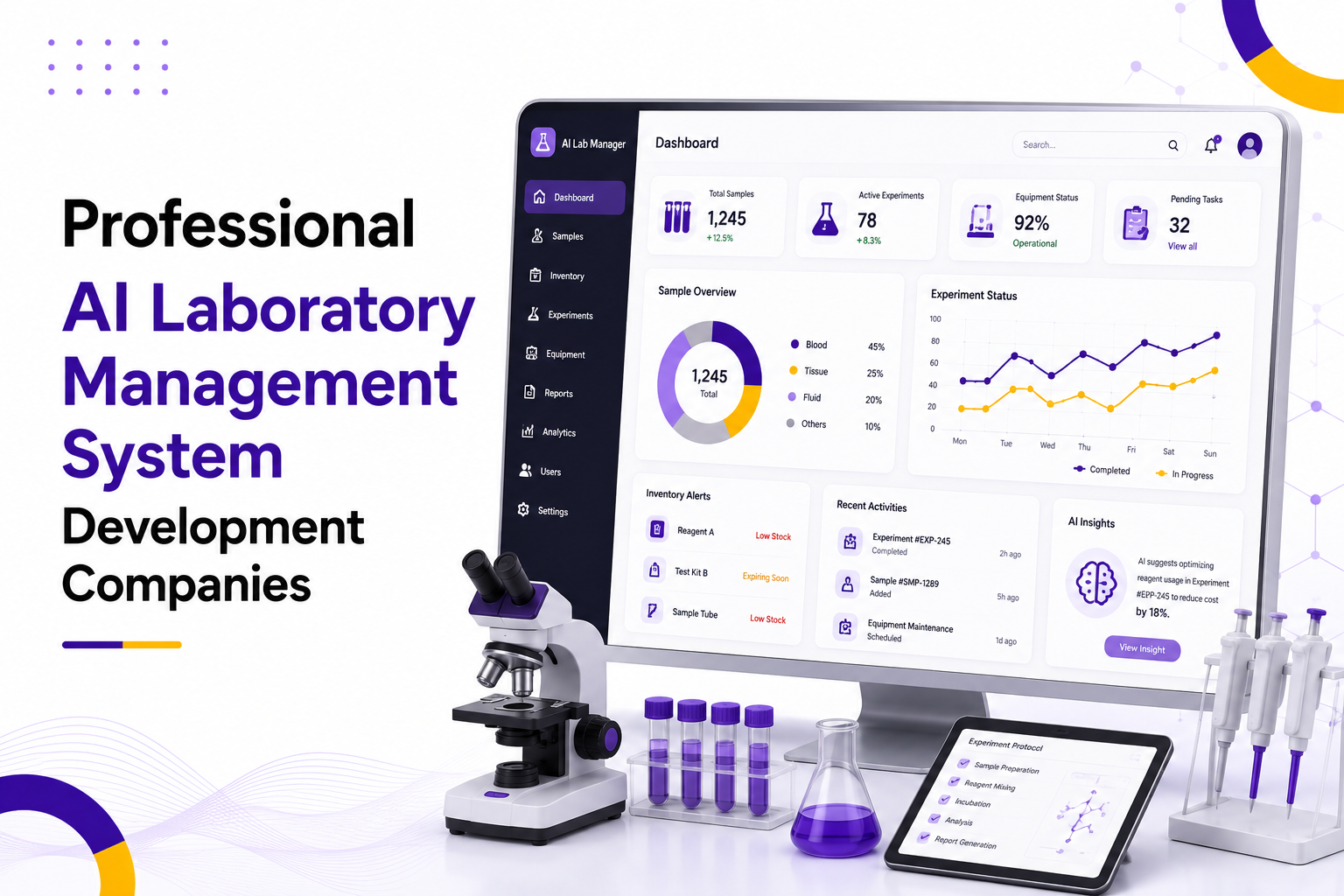
Labs run on data, and until fairly recently, most of that data lived in spreadsheets, paper logbooks, and disconnected instrument software that nobody fully trusted. That is changing quickly. A modern AI Laboratory Management System now sits at the center of how research teams track samples, catch errors before they become expensive, and cut down the hours technicians used to lose on manual data entry. For a diagnostics lab, a biotech startup, or a pharmaceutical quality control team, the gap between software that just stores records and software that actually helps you make decisions can be the difference between a smooth audit and a scramble.
This shift has been building for a few years, but 2026 is when it stopped being optional for a lot of labs. Instrument vendors now ship equipment with built in data export options, regulators expect cleaner digital audit trails, and lab managers are under pressure to process higher sample volumes without adding headcount. Software that can quietly absorb some of that load, by flagging a suspicious result before a technician signs off on it, for instance, is no longer a luxury feature reserved for large pharmaceutical companies.
If you are a founder or a lab operations lead trying to work out who can actually build this kind of system for you, the market is crowded and the vendors do not all do the same thing. Some sell rigid, off the shelf platforms that you have to bend your workflows around. Others build custom systems shaped around how your lab genuinely operates, with AI models trained to flag anomalies, predict instrument maintenance, or speed up regulatory reporting. This guide walks through 12 AI Laboratory Management System development companies worth shortlisting in 2026, what each one tends to be strongest at, and what to ask before you sign anything.
None of these companies are ranked strictly against each other, since the right fit depends on your lab type, budget, and how much of your existing infrastructure needs to stay in place. Think of this less as a leaderboard and more as a working shortlist you can narrow down based on your own priorities.
What a Strong AI Laboratory Management System Actually Needs to Do
Before comparing vendors, it helps to know what separates a genuinely useful system from a glorified spreadsheet with a login page. A capable AI Laboratory Management System should pull data directly from lab instruments instead of relying on someone retyping results, and it should flag unusual readings the moment they appear rather than at the end of a batch. It should also handle compliance documentation automatically, since labs working under FDA, ISO, or HIPAA rules cannot afford to reconstruct audit trails by hand.
It should also scale sensibly. A system that works fine for 200 samples a week but grinds to a crawl at 2,000 is not really solving the underlying problem, it is just delaying it. Ask any vendor directly how their architecture handles growth in both data volume and simultaneous users, since the answer tends to separate teams that have actually run a lab platform in production from those that have only built a prototype.
Just as important is how well the system fits your actual lab, not a generic template. Sample tracking, inventory management, and instrument calibration schedules look different in a genomics lab than they do in an environmental testing facility, so customization and integration flexibility matter more than a long feature list. The companies below range from large healthcare software specialists to focused development teams, and each brings a different mix of technical depth, industry compliance experience, and pricing structure to the table.
AI Features Worth Asking About in 2026
Not every AI feature a vendor mentions in a sales call is actually useful day to day, so it helps to know which ones tend to move the needle. Predictive maintenance alerts that flag an instrument likely to drift out of calibration, natural language search across historical sample records, and automated anomaly detection during result entry are the three features labs report getting the most consistent value from. Anything more experimental, such as fully automated report drafting, is worth piloting on a small dataset before rolling it out lab wide, since accuracy still varies quite a bit between vendors.
It is also worth asking each vendor how their AI models are validated and retrained over time, rather than assuming a model works the same way on day one as it will a year later once your lab's processes shift. Labs that skip this question sometimes end up with predictions that quietly become less accurate as new equipment or testing methods are introduced without anyone updating the underlying model.
The 12 Best AI Laboratory Management System Development Companies
HireFullStackDeveloperIndia provides full stack teams that can take a lab management project from database design through to a finished front end dashboard, which suits labs that want a single team handling the whole build instead of coordinating separate frontend and backend vendors. The India based delivery model also tends to bring meaningful cost advantages compared to hiring an equivalent in house team in the US or Europe.
Their developers typically work across common stacks used in healthcare software, including React or Angular for the interface and Node.js or Python for the server side logic, with experience building the kind of role based dashboards, reporting modules, and instrument integration layers a lab management platform needs. This makes them a practical option for startups that need a capable team without the overhead of a large agency.
The full stack model also reduces the coordination overhead that comes from managing separate frontend and backend vendors, since one team owns the entire build end to end and is accountable for how well the pieces fit together. Labs that have been burned by handoff issues between disconnected teams on a previous project tend to appreciate that single point of accountability.
ScienceSoft has been working in healthcare IT since 2005 and has built a reputation for developing custom laboratory software including LIMS, electronic lab notebooks, and laboratory execution systems for diagnostic and life sciences research labs. The company holds ISO 13485, ISO 9001, and ISO 27001 certifications and works within HIPAA, GDPR, FDA, and MDR requirements, which matters a great deal for labs operating under strict regulatory oversight.
What stands out is the breadth of instrument and data format support the company has built up over the years, including handling flow cytometry data and other domain specific formats that off the shelf tools often struggle with. Past projects have included diagnostic quality assurance tools and analysis software for cancer detection, so the team has direct experience with high stakes clinical use cases rather than only generic business software.
Given the company's size, it tends to suit mid sized and larger labs with a defined budget and a genuine need for regulatory documentation support, rather than an early stage startup looking for the cheapest possible build. Its consulting heavy approach at the start of a project, mapping existing workflows before writing any code, adds time upfront but tends to reduce costly rework later.
Backend Development Company focuses specifically on the infrastructure layer that most AI powered lab platforms depend on, including database architecture, API design, and secure data pipelines that connect instruments to a central system. For a lab management platform, this backend layer determines whether the system can handle thousands of sample records without slowing down or losing data integrity.
The company works with technologies suited to high volume, compliance sensitive data such as encrypted storage and role based access control, which lab administrators need when different technicians, supervisors, and auditors require different levels of visibility. Teams looking to modernize an aging LIMS backend or build a new one from scratch often bring this company in specifically for that structural work.
This makes it a good fit as a supporting partner rather than a sole vendor on larger projects, often paired with a separate frontend or AI focused team. Labs juggling multiple instrument brands with different data output formats tend to benefit most from this kind of dedicated backend expertise, since inconsistent data at the source is one of the most common causes of unreliable AI predictions downstream.
4. Orases
Orases is a United States based custom software firm with hands on experience building laboratory information management systems, including a notable project for Cumberland Valley Analytical Services, where it modernized an aging LIMS setup. The rebuild introduced editable templates, an integrated prediction engine for lab results, and a mobile application so field technicians could log data without returning to a desktop.
That project is a useful reference point for any lab weighing a full modernization rather than a patchwork of small fixes. Orases tends to work with organizations that have outgrown a legacy system and need someone who can both untangle the old software and design a cleaner replacement, including account handling and billing processes alongside the core sample workflows.
Its US based delivery team also means time zone alignment is rarely an issue for North American clients, which can matter during the more collaborative early planning stages of a project when frequent calls with lab stakeholders are common. That said, this tends to put it toward the higher end of the pricing spectrum compared with offshore or nearshore alternatives on this list.
Hourly Developers works well for lab operators who want to build or extend a laboratory management platform without committing to a large fixed price contract upfront. The company offers dedicated developers on flexible, hourly engagement models, which suits labs that need to iterate on features such as sample tracking dashboards or instrument integrations as requirements shift during the build.
Its teams cover backend engineering, cloud infrastructure, and AI model integration, so a lab can start with a smaller proof of concept feature and scale the engagement once the system proves useful. This pay as you go structure tends to appeal to smaller biotech teams and diagnostic startups that are still validating their exact workflow needs before locking in a full scope.
Because the engagement is billed hourly rather than milestone by milestone, communication cadence matters more here than with a fixed scope vendor. Labs that get the most value tend to assign a single internal point of contact, usually a lab manager or technical lead, who can answer implementation questions quickly and keep the development team from stalling on decisions that only someone inside the lab can make.
6. Arkenea
Arkenea builds bespoke laboratory management software with a clear focus on the day to day mechanics of running a lab, including accurate sample data recording throughout the testing workflow and automation of inventory and sample management processes. The company also configures order management and specimen collection workflows so labs can maintain compliance with regulatory norms without extra manual steps.
One feature worth noting is its work on personalized management dashboards that give lab leadership real time visibility into key performance indicators, which helps supervisors catch bottlenecks before they slow down turnaround times. Clients in the healthcare software space have specifically praised the firm's consistency across long term engagements, which matters for a system that will need ongoing updates as regulations and lab equipment change.
With over two decades in healthcare software, Arkenea tends to draw clients who value a long term maintenance relationship over a quick one off build. That longevity focused approach can mean a slightly longer initial planning phase, but it typically pays off for labs that expect their compliance and reporting needs to keep evolving well past launch day.
7. Chetu
Chetu is a US headquartered custom software company that builds laboratory information management systems with storage, inventory management, and protocol execution capabilities baked in. The company has also built integrations with major reference labs such as LabCorp, which is a practical advantage for any lab management platform that needs to exchange results with outside testing partners.
Beyond core LIMS work, Chetu has experience across adjacent healthcare and veterinary software, including practice management systems that integrate with laboratory information systems. That broader healthcare software background can be useful for labs that eventually want their management platform to talk to electronic health record systems or other clinical software down the line.
Its size and range of services also mean it can absorb larger, multi phase projects that smaller boutique firms might struggle to staff consistently. Labs planning a system that will eventually expand beyond a single site, or that anticipate needing several rounds of feature additions over multiple years, often value that scale and staffing depth.
HireAIDevelopers specializes in the machine learning layer that separates a modern AI Laboratory Management System from a traditional data logging tool, building models that can flag anomalous test results, predict when instruments need maintenance, or automate parts of quality control review. This is the piece many general software vendors outsource or handle only superficially.
The company typically works alongside a lab's existing data infrastructure rather than requiring a full platform rebuild, which makes it a sensible choice for labs that already have a functioning LIMS but want to add predictive analytics or natural language querying on top of it. Their developers bring experience in Python based machine learning frameworks along with the data engineering needed to keep model training pipelines clean and reliable.
Because model performance depends heavily on data quality, expect an early phase of the engagement to focus on auditing and cleaning historical lab records before any model training begins. Labs that skip this step with other vendors often end up with predictions that look impressive in a demo but perform poorly once real world data volume kicks in.
9. Exoft
Exoft offers laboratory information management system development that covers the full project lifecycle, from initial business analysis through deployment and ongoing support. A specific strength is connecting a new or upgraded LIMS with the other software systems a lab already relies on, enabling secure data exchange rather than leaving departments working from disconnected tools.
The company also handles migrations from older systems, which tends to be one of the more error prone parts of a lab software project if it is not managed carefully. Workflow automation is a core part of its offering too, covering data entry, instrument calibration scheduling, report generation, and inventory tracking for reagents and consumables, serving healthcare, pharmaceutical, and chemical testing labs.
Exoft's end to end scope, from early business analysis through deployment and support, appeals to labs that would rather work with one accountable vendor throughout the whole project than manage several specialists. That said, it is worth clarifying upfront exactly what falls under post launch support, since scope definitions vary between vendors even when the marketing language sounds identical.
10. Binariks
Binariks operates as a nearshore custom software development company with a dedicated pharma and life sciences practice that includes laboratory information management system development for sample tracking, data management, and workflow standardization. It has also built AI based tools for drug safety monitoring and adverse event processing, showing it can go beyond basic record keeping into more advanced analytics.
One project worth noting involved automating pharmaceutical documentation that previously took two to three weeks manually, cutting the process down to one to two days using AI, which illustrates the kind of efficiency gains labs and pharmaceutical teams are now expecting from custom software rather than treating it as a nice to have.
As a nearshore provider, Binariks tends to offer meaningful cost savings compared with fully US or Western European based teams while still keeping working hours reasonably aligned for regular collaboration. Its pharma specific practice also means the team arrives already familiar with the compliance vocabulary around drug safety and quality control, which shortens the early requirements gathering phase.
11. Folio3 Digital Health
Folio3 Digital Health focuses specifically on custom healthcare software, and its laboratory information management system work is built around interoperability, using HL7 and FHIR standards so lab data can move smoothly between the LIMS and other clinical systems such as electronic health records. For labs that sit inside a larger healthcare network, that interoperability focus can save significant integration headaches later.
The team designs each LIMS around a lab's specific operational needs rather than offering a single fixed template, which matters given how differently a hospital pathology lab and an independent diagnostics lab tend to operate. Their healthcare specific background also means they are generally familiar with the compliance expectations that come with handling patient linked lab data.
Because the company sits within a larger digital health group, clients sometimes gain access to broader healthcare engineering resources beyond the core LIMS team if a project later expands into adjacent areas such as patient facing portals. Labs planning to eventually connect their lab platform to a wider health system network may find that structural advantage worth the added conversation upfront.
12. Broughton Software
Broughton Software Limited is a UK based software development company offering laboratory information management solutions across a range of industries rather than focusing on a single vertical. That breadth can be an advantage for labs operating in less common sectors such as materials testing or industrial quality control, where healthcare focused vendors sometimes lack direct experience.
The company positions itself around building software that increases operational efficiency for its lab clients, and its LIMS work sits alongside broader custom development capabilities. Labs based in the UK or Europe evaluating vendors may find the local presence useful for support responsiveness and regulatory familiarity with regional data protection requirements.
Its cross industry client base can be a double edged consideration. It brings a wider range of problem solving experience to draw on, but labs with highly specialized clinical requirements should ask directly how much of the team's recent work has actually been in a comparable lab setting before assuming deep domain expertise.
How to Shortlist the Right Development Partner
Once you have a handful of companies in mind, the evaluation gets more specific than checking a portfolio. Ask each vendor how they handle instrument integration for your particular equipment, since a generic answer here is usually a warning sign. Ask what regulatory frameworks their past work has actually been audited against, not just which ones they claim familiarity with, and request a reference from a lab of similar size and complexity to yours.
Pricing structures vary quite a bit across this list. Some companies work on fixed scope contracts suited to a well defined project, while others, including hourly engagement models, work better when requirements are still evolving. A custom laboratory management build can range from around $40,000 for a narrowly scoped tool up to $250,000 or more for a full platform with AI driven analytics, instrument integrations, and multi site support, so it is worth getting at least three detailed quotes before committing. Pay attention to what happens after launch too, since ongoing support and model retraining are where many labs get caught off guard by unexpected costs.
It also helps to run a small pilot before committing to a full build, even if that means paying a vendor for a short discovery phase rather than jumping straight into development. A two to four week pilot focused on one workflow, such as sample intake or instrument data capture, reveals a lot about how a team communicates, how quickly they iterate on feedback, and whether their technical assumptions about your lab actually hold up once they see real data. That early signal is often more reliable than any portfolio review.
Finally, get clarity on data ownership and portability in writing before the project starts. If a vendor relationship does not work out down the line, you need to know you can export your lab's historical data and hand it to a new team without a lengthy dispute. This clause is easy to overlook during the excitement of kicking off a new project, but it protects your lab's operational continuity far more than any feature on a demo call.
Choosing the Right Partner for Your AI Laboratory Management System
There is no single best vendor on this list, because the right choice depends heavily on your lab's size, regulatory environment, and how much of your existing software you plan to keep. A pharmaceutical QC lab under strict FDA oversight has different priorities than a university research lab experimenting with new sample tracking workflows, and the companies above cover a wide enough range to fit both.
What matters most is treating the selection process the same way you would treat any critical lab equipment purchase. Look closely at each company's actual project history, ask direct questions about integration and compliance, and resist the pull toward whichever vendor has the flashiest AI marketing rather than the clearest track record. A well built AI Laboratory Management System should quietly make your lab run better for years, not just look impressive in a demo.
Give yourself enough time to evaluate properly too. Rushing this decision to hit an internal deadline tends to cost far more later, once a poorly scoped system needs to be reworked or replaced. Take the time to speak with each shortlisted vendor's past clients, compare how they handled unexpected issues during earlier projects, and choose the team that communicates clearly now, since that is usually a strong predictor of how the entire engagement will go.
Ayush Kanodia, an esteemed Director at HireFullStackDeveloperIndia, channels his passion into delivering cutting-edge IT services and solutions. Through his leadership, he has driven numerous successful projects, solidifying the company's standing as a pioneering force in the industry.
Build Your Agile Team
We provide you with a top-performing extended team for all your development needs in any technology.
Hourly
$20
It Includes
Duration
Hourly Basis
Communication
Phone, Skype, Slack, Chat, Email
Hiring Period
25 Hours (MIN)
Project Trackers
Daily Reports, Basecamp, Jira, Redmime, etc
Methodology
Agile
Monthly
$2600
It Includes
Duration
160 Hours
Communication
Phone, Skype, Slack, Chat, Email
Hiring Period
1 Month
Project Trackers
Daily Reports, Basecamp, Jira, Redmime, etc
Methodology
Agile
Team
$13200
It Includes
Team Members
1 (PM), 1 (QA), 4 (Developers)
Communication
Phone, Skype, Slack, Chat, Email
Hiring Period
1 Month
Project Trackers
Daily Reports, Basecamp, Jira, Redmime, etc
Methodology
Agile
Frequently Asked Questions
How long does it typically take to build a custom laboratory management system?
Most custom builds take between 4 and 9 months depending on scope. A narrow tool covering sample tracking alone can launch in under 4 months, while a full platform with AI analytics, multi site support, and legacy data migration often takes 7 to 9 months, sometimes longer if regulatory validation is required before going live.
Can an existing LIMS be upgraded with AI features instead of replacing it entirely?
Yes, and it is often cheaper than a full rebuild. Many development companies specialize in layering machine learning models, such as anomaly detection or predictive maintenance alerts, on top of an existing system through APIs, provided the current LIMS has clean, structured data and reasonably modern integration capabilities to work with.
What happens to lab data during a migration to a new system?
A proper migration involves mapping old records to the new schema, validating sample histories against original source data, and running the old and new systems in parallel for a defined period before full cutover. Skipping the parallel run is the most common cause of missing or mismatched historical records after migration.
Do small labs and startups actually need AI features, or is a basic LIMS enough?
It depends on data volume and error tolerance. A small lab processing a limited number of samples weekly may not see much benefit from predictive analytics yet. Once sample volume grows or manual review starts missing errors, AI features such as automated flagging typically pay for themselves within a year or so.
What ongoing costs should labs budget for after the system goes live?
Beyond hosting, expect costs for periodic model retraining as lab processes evolve, software updates tied to changing compliance rules, and a support retainer for bug fixes or minor feature requests. Many vendors offer tiered support plans, so it is worth clarifying response time guarantees before signing rather than after an issue arises.