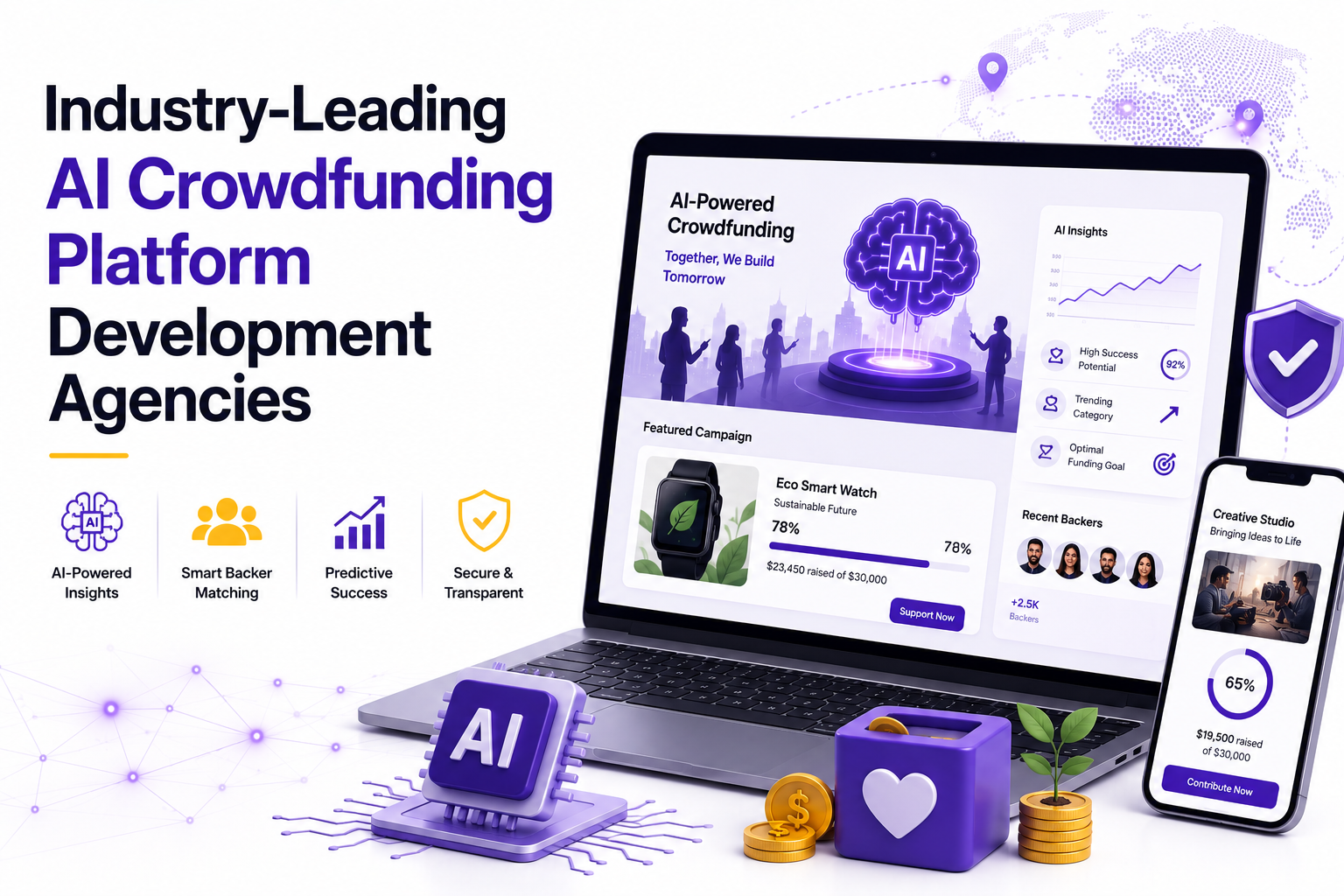

Somewhere between a founder's spreadsheet and a live fundraising page, a lot of things can go wrong. Payment gateways fail during peak traffic, fraud detection lags behind bad actors, and campaign discovery tools miss the people who would have backed a project in a heartbeat. This is exactly where a well built AI Crowdfunding Platform earns its keep. It is not just a donation button wrapped in nice design. It uses machine learning to flag suspicious transactions before they clear, predicts which campaigns are likely to succeed based on early engagement patterns, and personalizes recommendations so backers see projects they actually care about.
For CEOs and founders shortlisting a development partner in 2026, the challenge is not finding a company that can code. It is finding one that understands fintech compliance, payment orchestration, and AI driven personalization all at once. A crowdfunding platform touches money, data privacy, and public trust in equal measure, so the margin for error is thin. A single mishandled transaction or an unnoticed fraud pattern can undo months of careful brand building, which is why the choice of development partner deserves more scrutiny than most other software hires. It also helps to think about this as a long term relationship rather than a one time build, since the platform will need updates as payment regulations shift and as new fraud tactics emerge that the original model was never trained to catch.
This list breaks down 12 AI Crowdfunding Platform agencies that have shown real capability in building AI powered fundraising platforms, from full stack development shops to specialists in blockchain based crowdfunding. Each entry covers what they are known for, their technical strengths, and what kind of project they suit best, so you can shortlist with confidence instead of guessing. Whether you are building a reward based platform for creative projects or an equity based marketplace for accredited investors, there is a fit somewhere on this list. Take the time to read through each profile rather than jumping straight to a request for proposal, since the right technical match up front will save far more time than a fast decision made on brand recognition alone.
What Makes an AI Crowdfunding Platform Different From a Regular One
What to Check Before You Hire a Development Partner
Before signing off on any agency, look past the portfolio screenshots. Ask about their experience with payment gateway integrations across regions, since a platform built for the US market often needs rework for European PSD2 compliance or Indian RBI guidelines. Check whether their AI models are built in house or borrowed off the shelf, because a generic fraud detection library will not catch platform specific abuse patterns. And ask how they handle scaling, since a campaign that goes viral can spike traffic tenfold within hours. It is also worth asking for references from clients in a similar business category, because a platform built for creative product launches has different priorities than one built for real estate investment or medical fundraising, and an agency strong in one area is not automatically strong in another.
It also helps to ask how a prospective partner handles post launch support, since a crowdfunding platform is never really finished. Fraud patterns evolve, payment regulations change, and campaign formats that worked well last year may need a refresh. Agencies that treat launch as the finish line rather than the starting point tend to leave founders scrambling six months later when something breaks or a new compliance requirement appears without warning. A short trial project or paid discovery sprint before the full engagement can also reveal a lot about how a team communicates and handles surprises, well before either side is locked into a larger contract.
The 12 companies below were shortlisted based on demonstrated project work, technical depth, and client feedback across fintech and crowdfunding specific engagements.
12 Leading AI Crowdfunding Platform Development Companies to Consider
1. Hourly Developers
Hourly Developers works on a flexible hourly hiring model, which suits founders who want to scale a crowdfunding build up or down without committing to a fixed team size. Their developers cover backend architecture, API integrations for payment gateways like Stripe and Razorpay, and machine learning components for fraud scoring and campaign recommendation engines. Because clients pay only for hours logged, this model works well for MVPs and phased rollouts where requirements are still being refined as the product finds its footing in the market. The team also handles post launch maintenance, so platforms get bug fixes and feature updates without renegotiating a new contract every time something needs attention. They typically staff projects with a mix of senior architects for the initial build and mid level developers for ongoing iteration, which keeps costs balanced without sacrificing code quality. Best suited for founders who need to control burn rate while still getting senior level engineering talent on the build, particularly in the early, uncertain phase of a crowdfunding product's life. Founders who have worked with them also point to the transparency of hourly billing reports, which show exactly how time was spent on each feature, making it easier to spot where budget is going and adjust priorities mid sprint rather than waiting until the end of a fixed price milestone.
2. Antier Solutions
Antier Solutions has built a reputation in blockchain and DeFi development, which makes them a strong choice for founders building decentralized or token based crowdfunding platforms. Their service portfolio spans blockchain development, crypto exchange development, and fintech and banking solutions including digital banking platforms, e-wallets, and payment gateways. For a platform that needs smart contract based fund release, milestone triggered payouts, or token based reward systems, Antier brings relevant blockchain expertise most generalist dev shops do not have. Their engineers work across multiple chains, including Ethereum and Polygon, which matters if a platform needs to keep transaction fees low while still offering the transparency that token based backers expect from a decentralized fundraising model. They are best suited for founders exploring equity or token based crowdfunding models rather than simple reward based campaigns, since their core strength is in decentralized finance infrastructure rather than consumer facing campaign design. They have also completed a large volume of blockchain projects across fintech, gaming, and metaverse categories, so their engineering team is used to working under the kind of security scrutiny that comes with handling other people's money at scale.
3. Backend Development Company
Backend Development Company focuses specifically on backend architecture, which matters a lot for crowdfunding since transaction processing, ledger accuracy, and campaign data integrity all live at that layer. They build APIs that connect to multiple payment processors, set up webhook based reconciliation so funds match campaign totals in real time, and design database schemas that scale as campaign volume grows from a handful of pilot campaigns to thousands running simultaneously. They also work alongside AI teams to plug in fraud detection models without disrupting existing transaction flows, which is a detail that gets overlooked until a platform is already live and struggling under load. For founders who already have a frontend team or design partner and just need a rock solid backend, this is a practical fit, since their strength lies in stability under load rather than flashy interface work. They also document their APIs thoroughly, which makes it easier to bring in additional developers later without a long onboarding period, and their approach to error handling means failed transactions get logged and retried automatically instead of silently disappearing, which is a common failure point on platforms built without dedicated backend expertise.
4. Nyusoft
Nyusoft builds professional crowdfunding platforms that enable companies to raise capital and investors to participate in curated deals with clarity and control. Their work spans both mobile and web platforms, and they pair crowdfunding specific features like deal curation and investor dashboards with broader fintech experience across trading and digital banking projects. Client feedback highlights their clarity in reporting and consistency in delivery throughout the project lifecycle, which matters for founders who have been burned before by agencies that go quiet between milestones. Their platforms typically include encrypted connections and compliance with relevant financial regulations as a baseline rather than an add on, since much of their client base comes from the investment and trading space where that is a non negotiable requirement. For founders who want a platform that feels more like a structured investment marketplace than a casual donation site, Nyusoft's experience with curated deal flow and investor facing dashboards makes them worth a closer look, especially if the platform needs to support both retail backers and larger institutional participants within the same interface.
5. HireFullStackDeveloperIndia
As the name suggests, this company supplies full stack development talent out of India, covering both frontend campaign pages and backend transaction logic in a single engagement. Their developers typically work with React or Vue on the frontend and Node.js or Django on the backend, building crowdfunding platforms that handle everything from campaign creation wizards to donor dashboards and admin panels for content moderation. Because the team is based in India, pricing tends to be more accessible than US or Western European agencies, without necessarily compromising on code quality, which makes them a popular choice for bootstrapped founders trying to stretch a limited budget across a full platform build. They also offer dedicated developer models, meaning a founder can onboard one or two engineers who work exclusively on their project rather than juggling multiple clients at once, which tends to produce faster iteration cycles once the initial architecture is in place. Time zone overlap can be a minor adjustment for founders based in the US, but most teams handle this by shifting a few working hours to overlap with client availability, which keeps communication smooth without requiring anyone to work through the night.
6. Jappware
Jappware builds solutions for non traditional investments, allowing investors to participate in crowdfunding projects offering alternative assets such as real estate or cryptocurrencies, with an emphasis on transparency, risk management, and regulatory compliance. They also work on peer to peer financing tools, which share a lot of underlying infrastructure with crowdfunding platforms, things like credit assessment, automated risk scoring, and investment diversification logic that helps investors spread capital across multiple projects rather than concentrating risk in one place. Their platforms are built with an eye toward the specific compliance obligations that come with offering alternative assets, which is a detail that trips up many crowdfunding platforms built by agencies with only consumer app experience. Founders building a platform focused on alternative asset crowdfunding, rather than product or cause based campaigns, will find Jappware's regulatory and risk management experience particularly relevant to their needs, especially if the platform will operate across multiple jurisdictions with different investor protection rules. Their engineering team also has experience building credit scoring dashboards, which can be repurposed to help a crowdfunding platform assess the risk profile of individual campaigns before they go live to the public.
7. HireAIDevelopers
This agency specializes specifically in the AI layer of an AI Crowdfunding Platform, which is often the hardest part to get right. Their developers build fraud detection models trained on transaction patterns, recommendation engines that match backers to campaigns based on browsing and giving history, and natural language tools that can auto generate campaign summaries or flag policy violating content before it goes live for public viewing. Rather than building an entire platform from scratch, many founders bring in HireAIDevelopers specifically to bolt AI capabilities onto an existing crowdfunding site or to build the AI components while another team handles the core infrastructure and payment plumbing. Their narrow focus means deeper expertise in the machine learning side of things compared to generalist agencies, and their models tend to improve faster over time because the team is constantly refining fraud and recommendation logic across multiple client platforms rather than starting fresh with each new engagement. They also offer model monitoring after launch, flagging when prediction accuracy starts to drift so a platform does not quietly rely on a fraud model that has grown stale as backer behavior shifts over subsequent quarters.
8. KeyUA
KeyUA has delivered crowdfunding platform projects that focus on connecting international backers with campaigns, using tools like Stripe integration to protect client transactions and feedback systems that build trust between campaign creators and donors across different countries and currencies. Their development process is structured around clear discovery and requirements gathering before any code is written, which reduces the back and forth that often derails crowdfunding builds when scope keeps shifting mid project. They also pay close attention to front end performance and cross browser compatibility, which matters more than founders often expect since a slow or glitchy campaign page directly hurts conversion rates during the critical first few days of a fundraising push. They tend to work well with founders who have a clear vision but need a partner to translate it into a technically sound, secure platform without excessive scope creep along the way, and their step by step delivery process makes it easy to track progress against the original plan. They also build in feedback and review mechanisms early, which helps surface trust signals to new visitors browsing campaigns for the first time and deciding whether a project is worth backing.
9. Sparxit Solutions
Sparxit Solutions approaches crowdfunding platform development with a discovery first methodology, spending time validating the business idea, mapping user journeys, and defining technical infrastructure before development begins in earnest. Their discovery phase includes documenting vision, ideation, market research, and wireframing before concluding on the technical architecture, which front loads a lot of the thinking that other agencies leave for mid-project pivots. This structured approach suits founders who are still refining their crowdfunding model, whether reward based, donation based, or equity based, and want a partner who will push back on weak assumptions rather than just building whatever is asked without question. They also bring experience across nonprofit and cause driven platforms, not just startup fundraising, which gives them a broader sense of what donor psychology looks like outside of a pure investment context and how campaign framing changes depending on the cause. That cross domain experience often surfaces useful ideas during discovery that a founder focused purely on their own niche might not have considered otherwise.
10. Techanic Infotech
Techanic Infotech has established itself as a trusted name in crowdfunding app development by delivering customized, secure, and scalable digital solutions tailored for startups, enterprises, nonprofits, and investment platforms. Their approach emphasizes a client centric process, quality commitment, and transparent communication throughout the engagement, with regular check ins that keep founders informed without requiring them to chase updates. They cover the full range of crowdfunding models, which makes them a flexible option for founders who are not yet locked into one specific fundraising structure and want a partner who can adapt as the business model evolves over time and across markets. Their teams also bring experience with advanced payment integrations and security features designed specifically for platforms handling sensitive financial data, which reduces the risk of costly rework later if a founder decides to expand into new regions or add new campaign types after the initial launch. Their willingness to work across multiple crowdfunding formats within a single engagement also makes them a reasonable choice for platforms that expect to pivot their model as they learn more about their actual user base.
11. Crinpro Solutions
Crinpro Solutions is recognized for delivering software development services focused on robust crowdfunding platforms, with an emphasis on user engagement, secure transactions, and intuitive platform functionality that drives fundraising success for their clients. Their focus on user engagement stands out among more backend heavy agencies on this list, since they put real effort into campaign page design and donor experience, not just transaction plumbing that runs quietly in the background. This makes them a solid pick for founders who see the frontend experience as just as important as the technical backend when building out a fundraising platform meant to convert casual visitors into paying backers within a short attention span. They also test extensively across devices, since a large share of crowdfunding traffic now arrives through mobile, and a clunky mobile checkout flow can quietly cost a campaign a meaningful share of potential contributions. Their design led approach also tends to shorten the gap between initial concept and a presentable prototype, which helps founders test messaging with real users earlier in the process.
12. Itexus
Itexus specializes in fintech software development with deep experience in payment systems, and their crowdfunding work draws on that same infrastructure knowledge, covering everything from campaign management to automated payout processing and reconciliation across multiple payment providers. Their coverage of the crowdfunding landscape includes deep familiarity with platforms like Kickstarter, Indiegogo, and StartEngine, giving them a strong sense of what a competitive campaign flow needs to look like and where most first time platform builders tend to underestimate complexity. They are a good fit for founders who want a technically rigorous partner grounded in fintech best practices rather than a generalist agency that treats crowdfunding as just another app category to build and ship. Their experience across different crowdfunding models, from creative project funding to equity investment, also means they can advise on trade offs early rather than leaving a founder to discover them after launch. Their engineering culture leans toward thorough testing and documentation, which pays off later when a platform needs to pass a third party security audit before onboarding institutional investors.
Choosing the Right Partner for Your Platform
Choosing a development partner for an AI Crowdfunding Platform is less about finding the biggest name and more about matching technical strengths to what your platform actually needs. If fraud detection and personalization are the priority, an AI focused specialist like HireAIDevelopers makes sense. If milestone based fund release and blockchain trust matter more, Antier Solutions has that infrastructure ready to go. And if budget flexibility is the deciding factor, hourly or dedicated developer models from teams like Hourly Developers or HireFullStackDeveloperIndia keep costs predictable while the build is still evolving and requirements are still taking shape.
Before signing anything, ask each shortlisted agency for a technical breakdown of how they would handle your specific payment flows, fraud scenarios, and expected traffic patterns. A generic proposal is a warning sign. The right partner should be able to speak to your platform's specific risks within the first conversation, not just recite a list of past projects from a slide deck. Get that right, and the platform itself becomes the easy part, leaving you free to focus on the campaigns and community that actually make a crowdfunding business succeed. And remember that the cheapest quote rarely stays the cheapest option once you account for the cost of fixing security gaps or compliance oversights after the platform is already handling real money.