
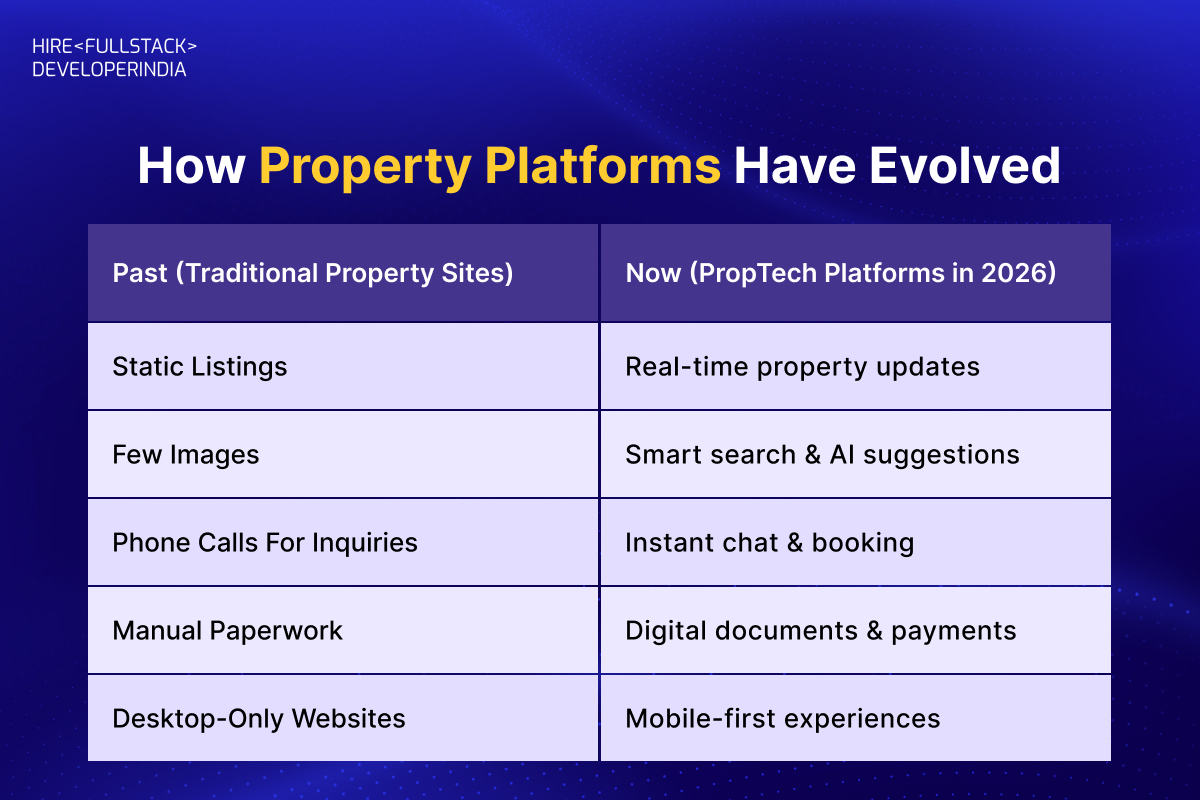
Not too long ago, property websites were just online notice boards. A few photos, a phone number, and a basic description—that was it. But in 2026, property tech platforms feel more like smart assistants. They help users find the right home, compare prices, book site visits, chat with agents, upload documents, and even make payments, all in one place.
This big shift didn’t happen overnight. It happened because real estate businesses started investing seriously in technology. And at the center of this change is one key role that often works quietly in the background—full stack developers.
Today, whether it’s a startup building a rental app or an enterprise launching a property marketplace, most successful companies hire full stack developers for PropTech to bring everything together smoothly.
How Property Platforms Have Changed Over the Years
Property tech has evolved fast, especially in the last few years.
People no longer want:
- Slow-loading websites
- Confusing search filters
- Endless phone calls
- Outdated property information
Instead, users expect:
- Real-time listings
- Smart property suggestions
- Easy booking and inquiry options
- Clean, mobile-friendly designs
Market trends show that digital-first real estate platforms now attract much higher engagement and conversion rates compared to traditional offline methods. This is why PropTech platforms are no longer optional—they’re essential.
To build and maintain these platforms, companies increasingly hire full stack developers for PropTech who can manage the entire system, not just one part of it.
What Does Property Tech (PropTech) Really Mean Today?
PropTech simply means using technology to improve how people buy, sell, rent, and manage properties.
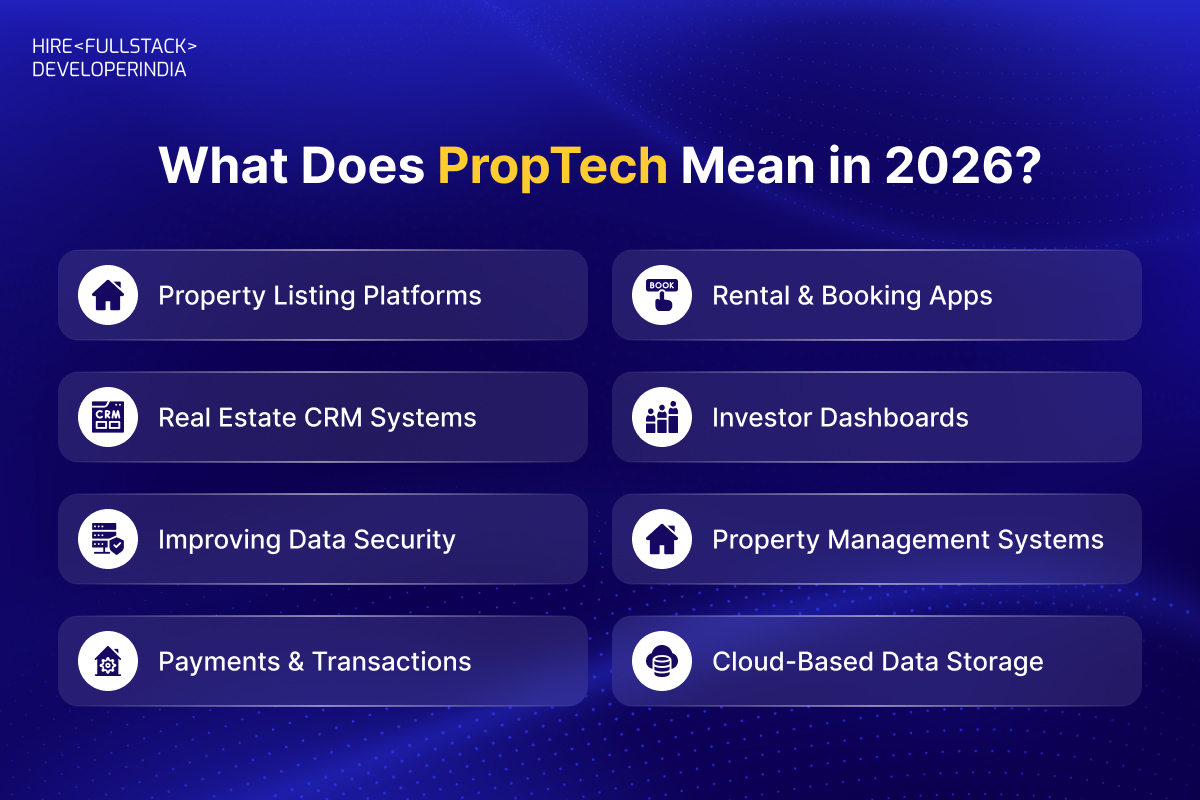
In 2026, PropTech includes:
- Property listing platforms
- Rental and booking apps
- Property management systems
- Real estate CRMs
- Investor dashboards
- Virtual tour platforms
All these systems must work together without friction. This is where full stack development becomes critical.
Who Are Full Stack Developers?
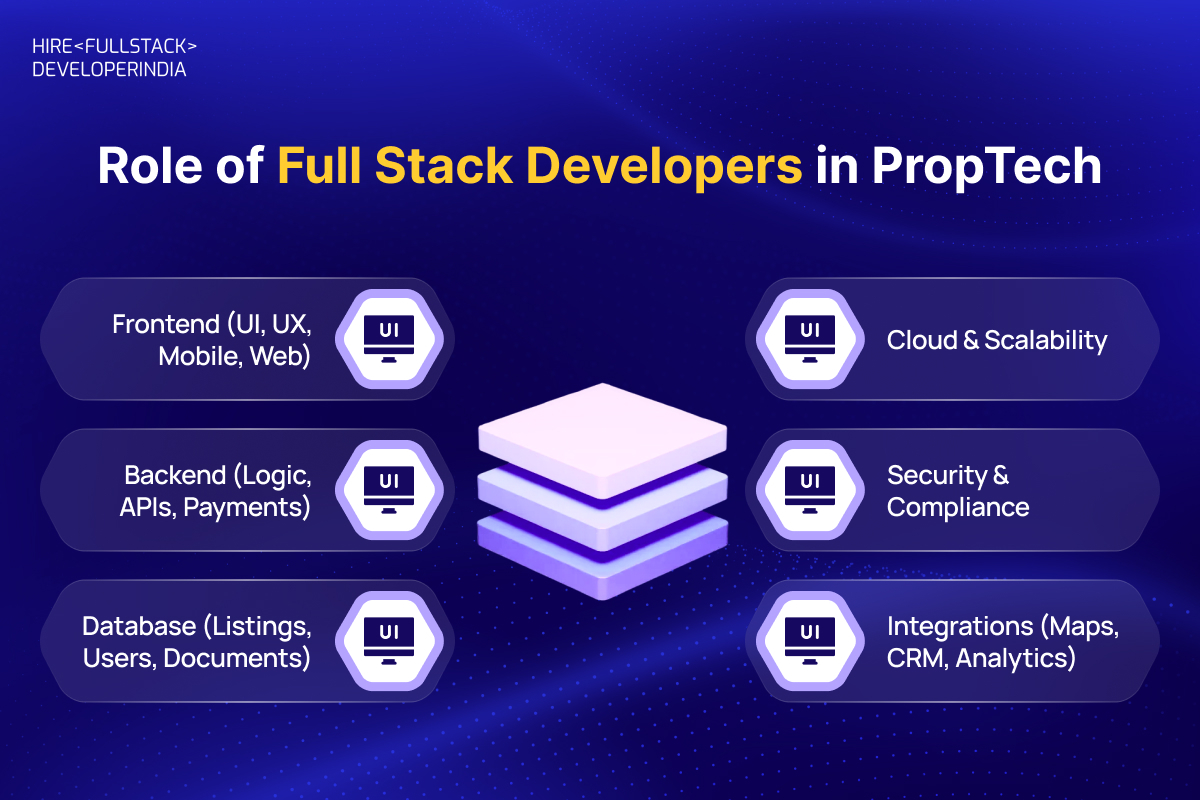
A full stack developer is someone who can work on:
- What users see (frontend)
- How things work behind the scenes (backend)
- Where data is stored (databases)
- How everything connects and scales (servers and cloud)
Instead of needing multiple separate teams, businesses can hire full stack developers who understand the full picture.
For property tech platforms, this is a big advantage because real estate systems are complex and interconnected.
Why Property Tech Platforms Need Full Stack Developers
Property platforms deal with:
- Large amounts of property data
- Multiple user types (buyers, sellers, agents, admins)
- High traffic during peak demand
- Secure payments and document handling
A full stack developer ensures:
- Smooth data flow across the platform
- Faster loading and better performance
- Fewer technical gaps between systems
- Faster updates and feature releases
This is why many real estate companies prefer working with a Fullstack Development company instead of hiring disconnected specialists.
How Full Stack Developers Create Effortless Property Experiences
User experience plays a huge role in the success of any property tech platform. Even the most advanced features won’t matter if users find the platform confusing or difficult to use. In real estate, where people already feel stressed about big decisions, a smooth digital experience makes all the difference.
Think about a property buyer using a platform for the first time. They want to search for properties without struggling with complicated filters. They want to compare listings side by side, save their favorite options, and come back later without losing progress. Most importantly, they want to book site visits or contact agents instantly, without long forms or unnecessary steps.
Now consider the experience of a seller or property agent. They want to upload listings quickly, add photos without technical issues, update prices easily, and track inquiries in real time. They also need a simple way to respond to interested buyers and manage multiple listings without confusion.
Full stack developers focus on making all of this feel natural and effortless. They ensure that every button, form, and feature works smoothly with the data and logic running in the background. Search results update correctly, saved properties stay synced across devices, and booking requests reach the right people instantly.
Good user experience is not just about attractive design or visuals. It is about how the entire system works together behind the scenes. When design, functionality, and data are perfectly connected, users don’t have to think about how the platform works—they can simply focus on finding or selling the right property.
The Technology Powering Modern Property Platforms
In 2026, many modern property platforms are built using full stack JavaScript for real estate apps. This technology is popular because it keeps things simple while delivering strong performance.
One big reason JavaScript works well is that it can be used for both the front side of a website and the back side that runs in the background. This helps platforms load faster, work smoothly, and stay easier to manage over time. For businesses, it also means quicker development and fewer technical complications.
Property platforms often need to handle things in real time. Users expect search results to update instantly, listings to stay current, and booking requests to go through without delay. JavaScript makes these actions feel quick and responsive, which improves the overall user experience.
Another advantage is how easily it connects with other tools. Property platforms often use maps, virtual tours, payment systems, and analytics. Full stack developers can link these features smoothly without making the platform slow or unstable. This is especially useful in custom real estate software development, where businesses need features that match their exact workflow.
Most property platforms today rely on:
- Simple and mobile-friendly user interfaces
- Systems that manage property listings, filters, and inquiries
- Secure cloud storage to handle property data safely
A good Fullstack Development company knows that the best technology is the one that supports business growth. Instead of choosing tools just because they are popular, they focus on what keeps the platform fast, reliable, and easy to use.
This is why many real estate businesses prefer to hire full stack developers for PropTech. With the right technology and the right team, property platforms become easier to build, easier to manage, and better for users.
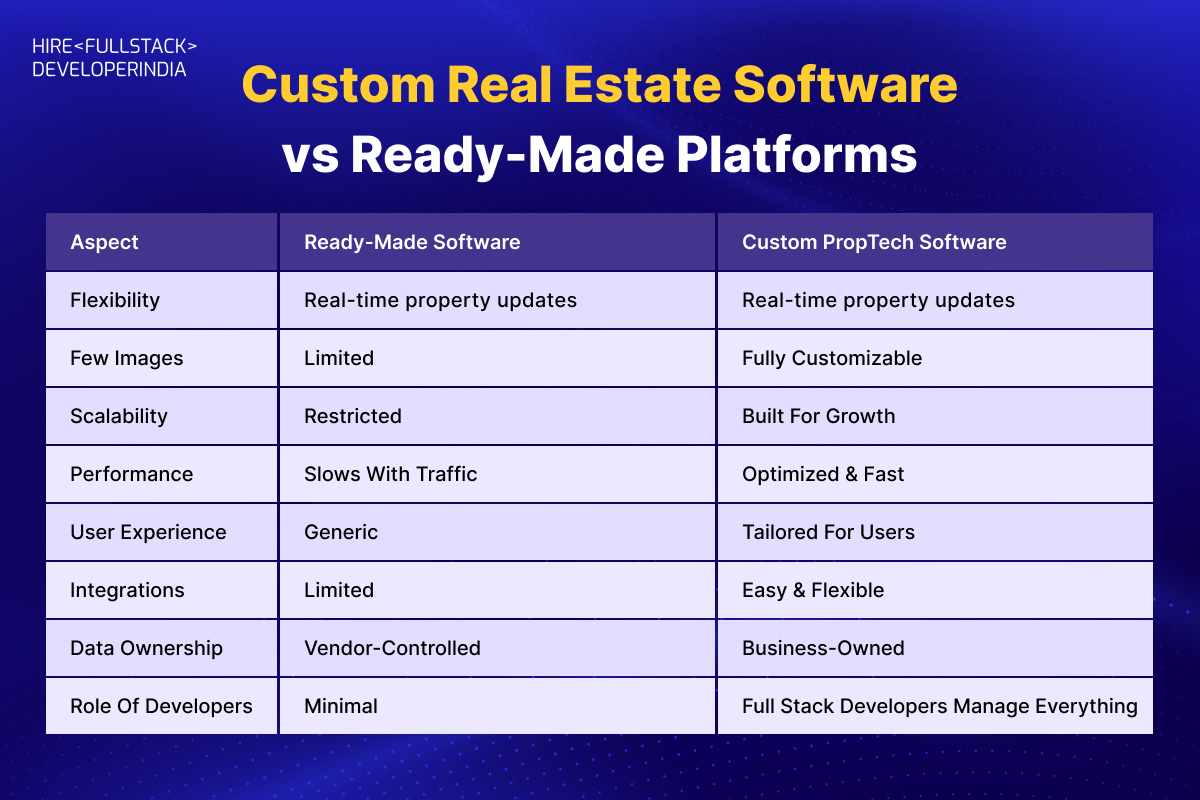
Custom Real Estate Software vs Ready-Made Solutions
When Customization Becomes Necessary
Customization becomes the better choice when:
- Your property business is growing fast
- You need features that ready-made tools don’t offer
- You want better performance and control
- Monthly software costs keep increasing
- You plan to scale your PropTech platform long term
At this stage, many businesses choose to hire full stack developers for PropTech or work with a reliable Fullstack Development company to build a platform that truly supports their goals.
How Full Stack Developers Build Solutions Around Business Needs
- They first understand the business
Before building anything, they learn how the property business works and what the company wants to achieve. - They focus on real problems
Instead of adding random features, they solve actual issues like slow searches, missed inquiries, or difficult listing uploads. - They make the platform easy to use
Everything is designed so buyers, sellers, and agents can use the platform without confusion. - They build only what is needed
Features are created based on business needs, not unnecessary extras that complicate the system. - They make sure everything works together
Search, listings, messages, and bookings all connect smoothly behind the scenes. - They plan for future growth
The platform is built in a way that allows new features and more users later without major changes. - They keep the platform fast and stable
Pages load quickly and actions happen without delays, even when many people use the platform. - They protect important data
User details, property information, and documents are kept safe and secure. - They make updates easy
Changes and improvements can be added without rebuilding the whole system. - They help the business grow over time
The final platform supports long-term goals, not just short-term needs.
Benefits of Custom Real Estate Software Development
- Made only for your business
The software is built according to how your real estate business works, instead of forcing you to adjust to someone else’s system. - Very easy to use for everyone
Buyers, sellers, and agents can use the platform without training because features are simple and clear. - Faster and smoother performance
Since there are no unnecessary features, the platform loads quickly and works without delays. - Can grow with your business
As your listings, users, or locations increase, the software can handle the growth easily. - Saves money in the long run
Even if the starting cost is higher, you avoid monthly fees, paid upgrades, and hidden charges later. - Full control over features
You can add, remove, or change features whenever your business needs it. - Better branding and trust
The platform looks professional and matches your brand, helping users trust your business. - Stronger data security
Customer details, property information, and documents stay safe under your control. - Easy to connect with other tools
It can smoothly connect with payment systems, maps, CRMs, and analytics tools. - Improves daily work for your team
Agents and staff can manage listings, leads, and inquiries more easily and faster. - Better experience for customers
Users enjoy a smooth journey, which increases inquiries, bookings, and conversions. - Long-term business value
The software becomes a valuable digital asset that supports growth for many years.
Why Businesses Prefer to Hire Full Stack Developers for PropTech
Real estate platforms are not simple websites anymore. They need to manage property listings, user accounts, searches, inquiries, bookings, payments, and data security—all at the same time. To handle this smoothly, many businesses choose to hire full stack developers for PropTech.
- Efficiency Through One Complete Development Team
One big reason is efficiency. Full stack developers can work on both the front side of a platform that users see and the back side that runs in the background. This means fewer people are needed to build and manage the platform, which saves time and avoids confusion between different teams. - Faster Development and Quicker Updates
Another important reason is faster development. When one skilled team understands the entire system, changes and updates can be made quickly. New features, design improvements, or fixes do not get delayed because everything is handled in one place. - Lower Costs and Better Budget Control
Businesses also save money in the long run. Instead of hiring separate designers, backend developers, and database experts, companies can hire full stack developers who handle everything together. This reduces hiring costs and ongoing maintenance expenses. - Better Problem-Solving With a Complete View of the Platform
Full stack developers also offer better problem-solving. They see the whole picture of how a property platform works. When an issue arises, they can identify the root cause quickly and fix it without breaking other parts of the system. - Easy Scalability as the Platform Grows
Scalability is another key factor. Property platforms often grow fast, especially during peak buying or rental seasons. Full stack developers build systems that can handle more users, more listings, and higher traffic without slowing down. - Ongoing Support and Long-Term Technology Partnership
Many businesses also prefer working with a Fullstack Development company because it offers ongoing support. As market needs change, developers can improve the platform, add new features, and keep it updated with modern technology.
Most importantly, full stack developers help align technology with business goals. They don’t just build software—they build platforms that support growth, improve user experience, and increase revenue.
For real estate businesses planning long-term success, choosing to hire full stack developers for PropTech is a practical and smart decision.
Real-Life Examples of Property Tech Platforms Built Using Full Stack Development
- Online Property Listing Portals
Platforms like housing or rental websites allow users to search properties, apply filters, save listings, and contact sellers or agents. Full stack developers ensure that search results load quickly, listings stay updated, and inquiries reach the right people instantly. - Rental and Booking Platforms
These platforms let users book rental homes, short stays, or commercial spaces online. Full stack developers build systems that manage availability, pricing, bookings, and payments smoothly, even during high traffic. - Property Management Systems
Used by landlords and property managers to handle rent collection, maintenance requests, tenant communication, and documents. Full stack development keeps everything connected in one dashboard, making daily operations easier. - Real Estate CRM Platforms
These systems help agents track leads, follow up with buyers, manage listings, and close deals faster. Full stack developers connect customer data, communication tools, and analytics in one place. - Commercial Real Estate Platforms
Designed for offices, retail spaces, and warehouses, these platforms manage large datasets, complex pricing, and long-term leases. Full stack developers ensure stability and smooth performance. - Investor and Analytics Dashboards
Used by property investors to track returns, market trends, and portfolio performance. Full stack development helps turn large amounts of data into clear and simple insights. - Virtual Tour and Property Experience Platforms
Platforms offering virtual property tours, images, and videos rely on full stack developers to keep experiences fast and smooth across devices.
Conclusion
Property tech platforms have moved far beyond simple listing websites. In 2026, they are full digital ecosystems that support buying, selling, renting, and managing properties from one place. Behind these platforms, full stack developers play a quiet but powerful role by making sure everything works smoothly together.
For real estate businesses, the decision to hire full stack developers for PropTech is no longer just about technology. It is about building platforms that are faster, easier to use, and ready for long-term growth. With the right full stack team, property platforms don’t just function—they perform, scale, and deliver real business value.