.png?w=1920&q=75)

Have you ever wondered how billions of connected devices and intelligent systems manage to make decisions in real time? The answer lies in the powerful combination of the Internet of Things (IoT), Artificial Intelligence (AI), and a revolutionary technology called edge computing. As industries increasingly depend on smart sensors, autonomous machines, and data-driven operations, managing the massive flow of data has become a major challenge. Traditional cloud systems often fall short when instant responses are needed. That’s where edge computing for IoT comes in—bringing data processing closer to where it’s generated, ensuring faster and more secure decision-making. Similarly, edge computing for AI applications allows devices to analyze and act on data locally, minimizing latency and boosting performance.
Together, these innovations are redefining how businesses operate, paving the way for intelligent, connected, and efficient digital ecosystems across every industry.
This blog explores the significance of edge computing and how it plays a crucial role in powering intelligent, efficient, and next-generation digital solutions that are both reliable and future-ready.
What Is Edge Computing?
Edge computing means processing data near where it is created instead of sending everything to faraway cloud servers. It’s like giving smart devices their own “mini brain” to make quick decisions without always depending on the internet.
Unlike traditional cloud computing, which collects data from devices and sends it all the way to the cloud for analysis, edge computing handles most of the work locally. This makes it faster, reduces delays, and keeps data more secure.
In simple terms, edge computing’s setup includes edge devices—like sensors, routers, or gateways—that process and analyze data nearby before sending only important information to the cloud.
You can find examples of edge computing everywhere: smart cameras that detect motion instantly, IoT sensors that track factory machines in real time, and autonomous vehicles that make driving decisions within seconds—all without waiting for the cloud to respond.
Why Edge Computing Matters for IoT
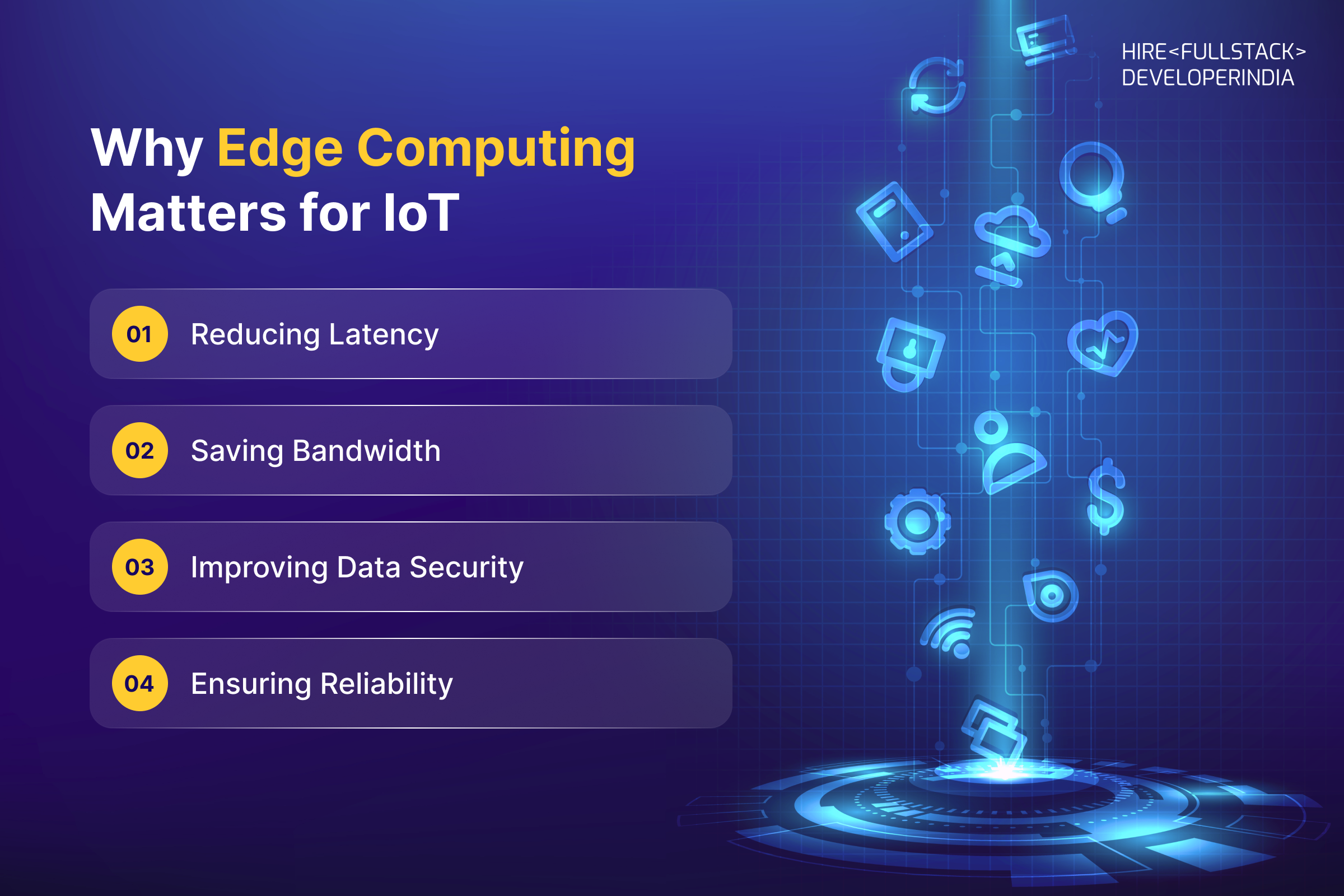
IoT devices, such as sensors, wearables, and connected machines, constantly generate data. The more devices you have, the more data is produced. Sending all this information to the cloud can cause delays and increase costs. Edge computing for IoT helps solve these issues by:
1. Reducing Latency
Latency is the delay between data being sent and received. For IoT systems, especially in healthcare or manufacturing, even a few seconds of delay can be critical. Edge computing ensures faster response times by processing data locally.
2. Saving Bandwidth
When IoT devices handle data at the edge, only essential information is sent to the cloud. This reduces internet usage and keeps systems running smoothly even if the connection is weak.
3. Improving Data Security
Local processing means less data travels across the internet, lowering the chances of cyberattacks. Sensitive data, like patient health information, can be analyzed at the edge and shared securely when needed.
4. Ensuring Reliability
IoT systems in remote or unstable network areas can continue functioning even without constant cloud connectivity. Edge computing allows them to store and analyze data offline and sync when the connection returns.
These benefits make edge computing for IoT essential for real-world systems that need quick and reliable operations.
The Connection Between Edge Computing, IoT, and AI
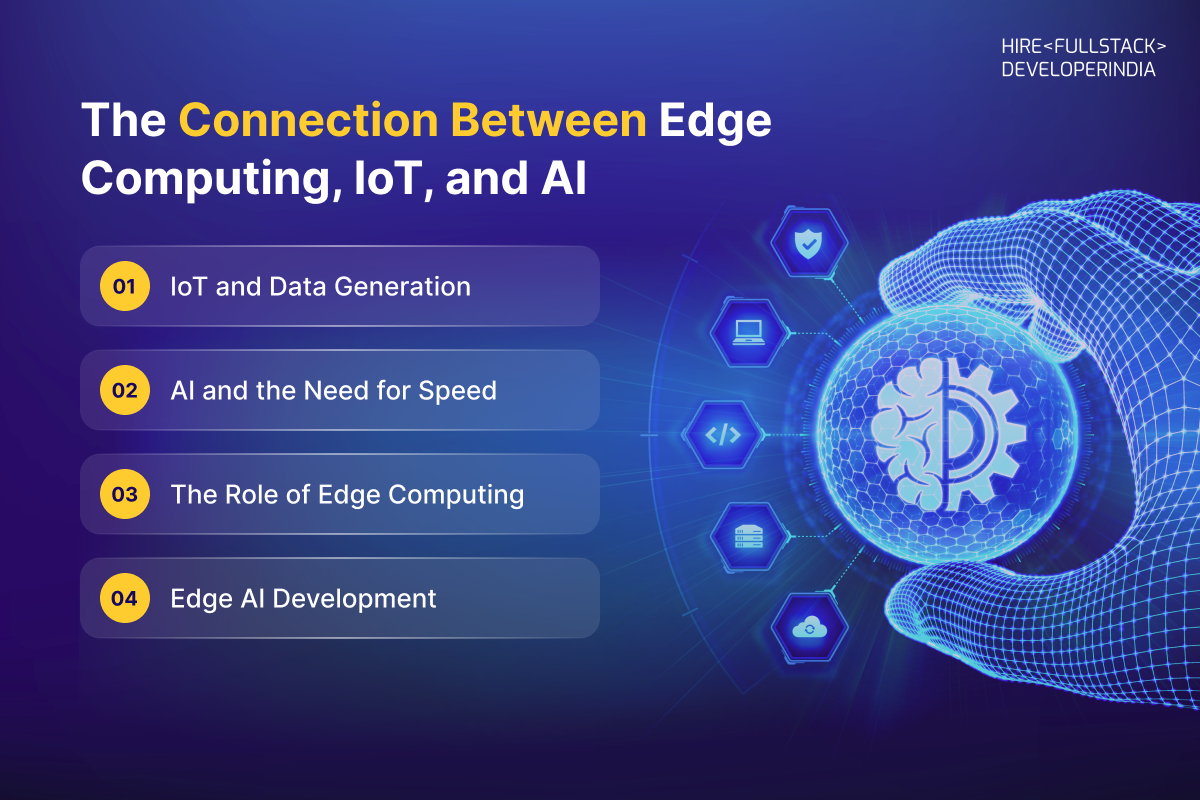
The Internet of Things (IoT) and Artificial Intelligence (AI) are two of the most powerful technologies driving digital transformation today. When combined with edge computing, they create an intelligent, efficient, and responsive ecosystem capable of processing and analyzing data in real time.
1. IoT and Data Generation
- IoT connects billions of devices—such as sensors, cameras, and machines—that continuously collect and share data.
- Every connected device gathers information about its surroundings, performance, or user interactions.
- This creates a massive volume of real-time data that must be processed quickly to be useful. Without timely analysis, this data becomes overwhelming and loses its business value.
2. AI and the Need for Speed
- Artificial Intelligence uses this IoT data to make intelligent predictions, automate processes, and deliver personalized experiences.
- AI models require fast, reliable, and clean data to function effectively.
- Delays in data transfer or processing can lead to inaccurate results or slow decision-making.
3. The Role of Edge Computing
- Edge computing solves this challenge by processing data near its source rather than sending it to distant cloud servers.
- This reduces latency and enables real-time decision-making.
- Edge computing for IoT ensures that connected devices operate faster and more efficiently.
- Edge computing for AI applications allows AI models to run locally, providing instant responses and reducing cloud dependency.
4. Edge AI Development
- Through edge AI development, AI algorithms are embedded directly into edge devices like autonomous vehicles, drones, and factory robots.
- This integration allows devices to think, learn, and act independently.
- Even without internet access, they can analyze data, make quick decisions, and improve performance over time.
Together, IoT, AI, and edge computing create the foundation for a smarter, faster, and more connected digital world.
Why Edge Computing is Essential for Smart IoT and AI Apps
As industries continue to adopt the Internet of Things (IoT) and Artificial Intelligence (AI) at scale, the demand for faster, more reliable, and efficient data processing is growing rapidly. Traditional cloud-based systems, though powerful, often struggle to meet these expectations due to latency, bandwidth limitations, and security challenges. This is where edge computing plays a crucial role. By processing data near the source, it enhances the performance, scalability, and intelligence of connected systems. Let’s explore why edge computing for IoT and edge computing for AI applications are essential for building smart and future-ready solutions.
a. Reduced Latency and Faster Processing
In IoT and AI-based systems, speed is everything. Whether it’s an autonomous vehicle avoiding a collision or a factory machine detecting a fault, decisions must be made instantly. Edge computing minimizes latency by analyzing data locally instead of sending it to distant cloud servers.
- Example: A self-driving car cannot wait for cloud instructions to brake — it needs to process sensor data on the spot.
Similarly, in predictive maintenance, edge computing for IoT allows sensors to monitor machine performance in real time and alert operators before a breakdown occurs. - This local processing ensures faster response times, improved safety, and higher operational efficiency, which are vital for time-critical IoT and AI applications.
b. Improved Data Privacy and Security
With billions of IoT devices collecting sensitive data, cybersecurity has become a top concern. Edge computing strengthens data protection by keeping information close to its source. Instead of transferring raw data to the cloud, devices process and filter it locally, minimizing exposure to potential cyber threats.
- Local processing reduces the risk of data interception or unauthorized access.
- It also aligns better with privacy regulations such as GDPR, making it ideal for industries like healthcare and finance.
By combining edge computing for AI applications with local security controls, businesses can build safer, more trustworthy smart systems.
c. Lower Bandwidth Usage and Reduced Cloud Dependency
Sending large volumes of raw data to the cloud requires significant bandwidth, which can be expensive and inefficient. Edge computing optimizes this by processing data at the edge and transmitting only the most important insights.
- This approach cuts down bandwidth costs and lowers network congestion.
- It also reduces reliance on constant internet connectivity, making operations smoother.
For instance, a smart factory using edge AI development can process production data locally and share only summarized insights with the cloud, saving both time and resources.
d. Better Reliability and Offline Functionality
One of the biggest advantages of edge computing is its ability to function even when the internet connection is weak or unavailable.
- Edge devices continue to collect and process data offline, ensuring uninterrupted performance.
- This is especially useful in remote areas or industries like agriculture, logistics, and mining.
Example: Remote IoT sensors in farms can continue to monitor soil and weather conditions and trigger actions locally, even without real-time cloud access. Similarly, smart home systems can maintain essential functions like lighting and security even during connectivity issues.
e. Scalability and Efficiency
The number of connected IoT devices is expected to surpass 30 billion by 2030, creating enormous data loads for businesses to handle. Edge computing supports this growth by distributing workloads across multiple devices and nodes rather than relying on a single centralized system.
- It allows organizations to scale efficiently as more devices are added.
- Through edge AI development, AI models can be deployed on several edge devices
- simultaneously, enabling intelligent processing across networks.
This distributed model not only improves system performance but also enhances flexibility and cost-efficiency for businesses expanding their IoT and AI ecosystems.
In short, edge computing for IoT and edge computing for AI applications are essential pillars of modern smart systems. They empower devices to operate faster, more securely, and independently — driving innovation across industries and laying the foundation for a connected, intelligent, and resilient digital future.
The Benefits of Combining Edge Computing, IoT, and AI
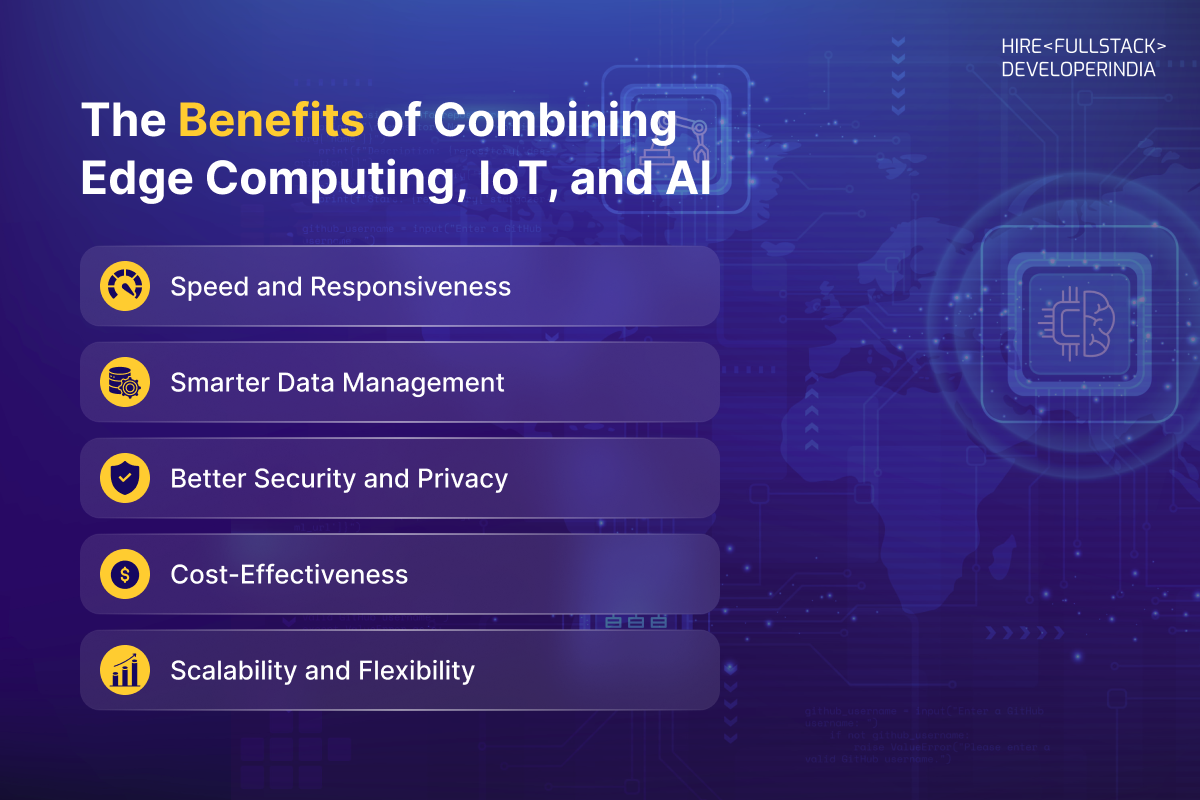
When IoT (Internet of Things) and AI (Artificial Intelligence) are combined with edge computing, they create a smart and high-performing ecosystem that’s reshaping how businesses operate. This combination allows connected devices to process, analyze, and act on data instantly — without always relying on the cloud. Let’s look at the major benefits this integration brings.
1. Speed and Responsiveness
In traditional systems, data travels all the way to cloud servers for processing, which can cause delays. With edge computing, data is processed right where it’s generated — near the IoT devices. This makes responses almost instantaneous.
For industries like manufacturing, healthcare, and transportation, where every second counts, this real-time processing is critical. For example, an AI-powered robot on a factory floor can detect and fix an issue immediately without waiting for cloud instructions.
2. Smarter Data Management
IoT devices generate an enormous amount of data daily — much of which is repetitive or unnecessary. Edge computing helps filter this data at the source, keeping only useful insights.
This reduces cloud storage costs and ensures that the data being analyzed is more relevant and actionable.
3. Better Security and Privacy
By processing sensitive information locally, edge computing reduces the risks of data breaches and unauthorized access. Personal or business-critical data stays within the local network, making the system more secure and compliant with privacy regulations.
4. Cost-Effectiveness
Less dependence on the cloud means lower costs. Businesses can save money on bandwidth, data storage, and infrastructure. Processing locally also improves efficiency and reduces energy usage.
5. Scalability and Flexibility
As companies add more IoT devices, edge computing makes it easier to scale. Instead of overloading the cloud, each edge node handles its data independently, allowing smooth and efficient expansion.
In essence, edge computing for IoT and edge AI development work hand in hand to deliver faster performance, smarter operations, and stronger security — forming the foundation for future-ready, intelligent technologies.
Real-World Use Cases of Edge Computing in IoT and AI
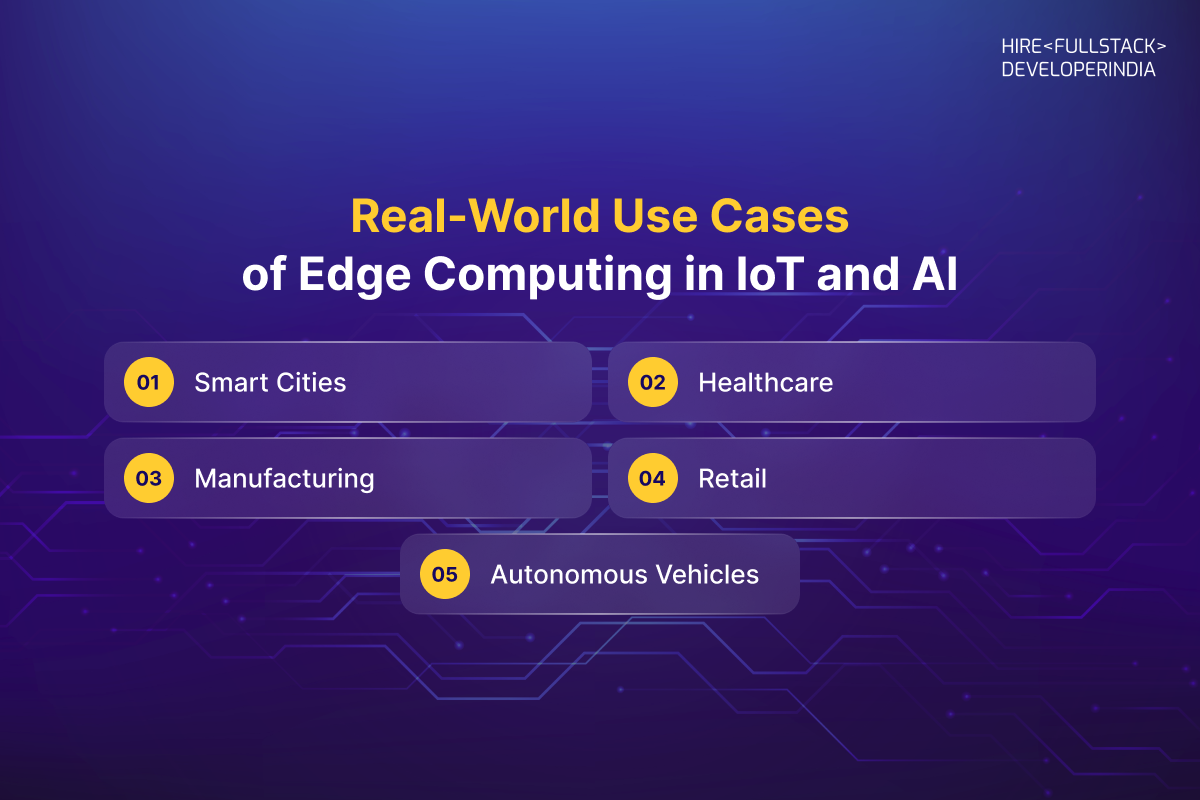
Edge computing is transforming how IoT and AI systems operate in the real world by enabling faster decisions, smarter automation, and efficient data handling. Let’s explore some key applications across industries where this technology is making a real impact.
1. Smart Cities
In smart cities, edge computing helps manage traffic, waste, and energy more efficiently. Sensors and cameras placed across roads analyze real-time data to control traffic lights and reduce congestion. Waste management systems can detect when bins are full and schedule pickups automatically, while smart grids use local data to optimize electricity distribution. These applications make cities safer, cleaner, and more energy-efficient.
2. Healthcare
In the medical field, edge computing supports remote patient monitoring and AI-assisted diagnostics. Wearable devices collect health data like heart rate or oxygen levels and process it instantly on the device. This allows doctors to receive timely alerts about patients’ conditions, even in areas with poor connectivity, improving patient care and outcomes.
3. Manufacturing
Factories use edge computing to power predictive maintenance and robotic automation. Sensors on machines analyze performance data locally to detect faults before they cause breakdowns. Robotic systems equipped with edge AI make quick decisions for quality control and assembly tasks, enhancing productivity and reducing downtime.
4. Retail
Retailers use edge computing to create personalized shopping experiences and track inventory in real time. AI-driven cameras and sensors analyze customer behavior, helping stores recommend products instantly or adjust pricing dynamically.
5. Autonomous Vehicles
Self-driving cars rely on edge AI to process massive data from cameras and sensors instantly. Local decision-making ensures immediate responses — like braking or lane changes — ensuring passenger safety without cloud delays.
In short, edge computing empowers IoT and AI to function smarter, faster, and more reliably across every major industry.
Challenges in Edge Computing for IoT and AI
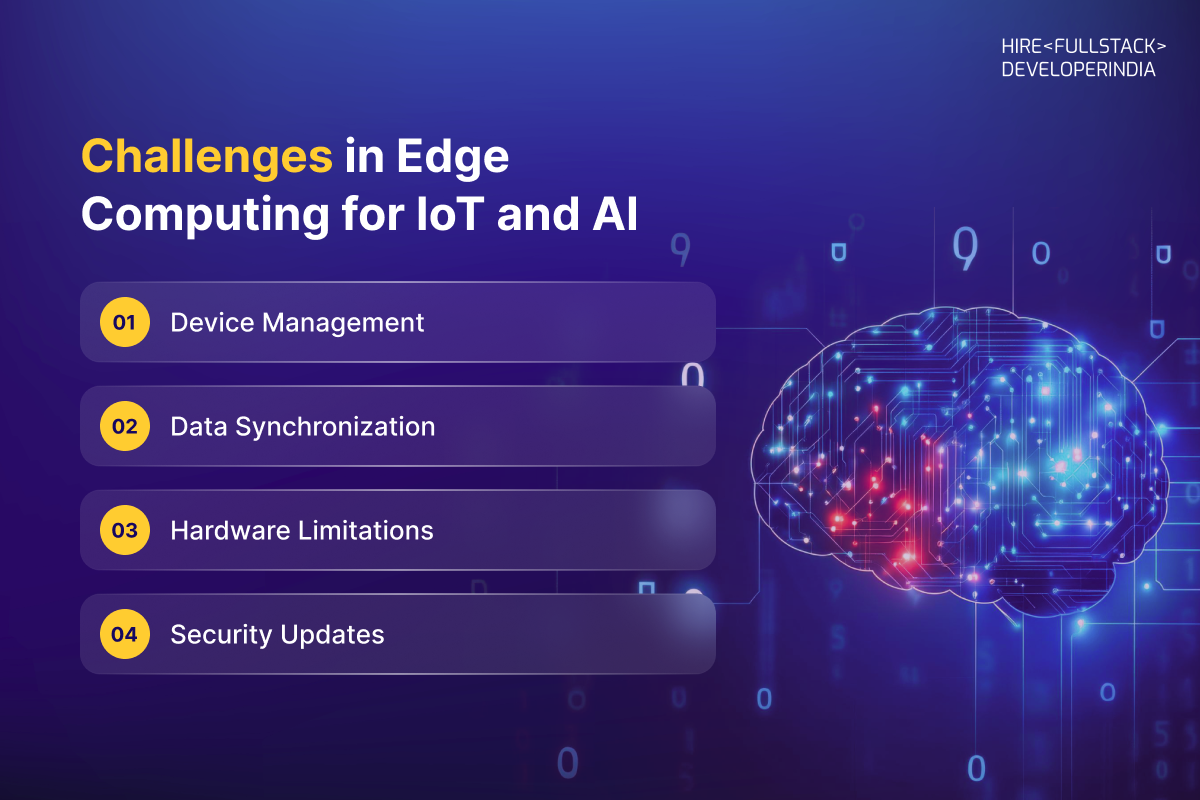
Edge computing is playing a huge role in making IoT and AI systems smarter and faster. It brings processing closer to where data is created, helping devices make instant decisions. But like any emerging technology, it also comes with certain challenges that businesses need to understand and manage carefully.
1. Device Management
Managing a large number of edge devices across different locations can be difficult. Each device needs to be monitored, maintained, and updated regularly. For example, a company using thousands of IoT sensors across factories must ensure that all devices are functioning properly and connected securely. Without proper management tools, this can quickly become overwhelming.
2. Data Synchronization
One of the biggest challenges is keeping data consistent between edge devices and the cloud. Since edge computing processes data locally, there’s always a need to ensure that important information is accurately synchronized with cloud systems. Poor synchronization can lead to outdated insights or decision-making errors, especially in industries like healthcare and logistics where accuracy is critical.
3. Hardware Limitations
Edge devices, such as sensors and gateways, usually have limited computing power compared to large cloud servers. Running advanced AI models or handling large datasets locally can sometimes be challenging. Businesses must find the right balance between processing data on the edge and offloading complex tasks to the cloud.
4. Security Updates
Keeping edge devices secure is another major concern. Each device is a potential entry point for cyberattacks. Regular software updates and patches are crucial, but managing them across thousands of distributed devices can be complicated and time-consuming.
Overcoming these challenges requires technical expertise and proper planning. Many organizations today Hire AI Developers who specialize in edge computing for IoT and AI. These professionals help design systems that balance speed, security, and scalability — ensuring that edge technology delivers its full potential while minimizing risks.
Why Businesses Are Turning to Edge AI Development
Smarter and Faster Decisions:
Businesses across industries are adopting edge AI development because it combines the power of Artificial Intelligence (AI) and edge computing, allowing them to make instant, data-driven decisions right where the data is created.
Real-Time Use Cases:
- In manufacturing, AI-powered sensors predict equipment failures before they happen (predictive maintenance).
- In retail, edge AI analyzes customer behavior in real time to improve shopping experiences.
- In logistics, it optimizes delivery routes and reduces transportation costs.
Instant Insights Without Cloud Delays:
Edge AI processes data locally, so businesses get immediate and actionable insights without waiting for information to travel to the cloud and back.
- This ensures faster responses and better performance, even in remote areas.
Increased Data Security:
- Since data is processed and stored closer to its source, there’s less risk of data breaches.
- Sensitive business or customer information remains protected within local networks.
Reduced Cloud Dependency:
Edge AI systems work efficiently even with limited or no internet connectivity, ensuring continuous operations without relying on the cloud 24/7.
Expertise Matters:
Many companies now Hire AI Developers with expertise in edge technologies to build intelligent systems that are:
- Efficient and scalable
- Secure and reliable
- Capable of real-time performance on-site
Environmentally Friendly:
Edge AI supports green computing by reducing data transmission and energy consumption.
It lowers carbon emissions and makes digital operations more sustainable.
The Future of Edge Computing for IoT and AI Applications
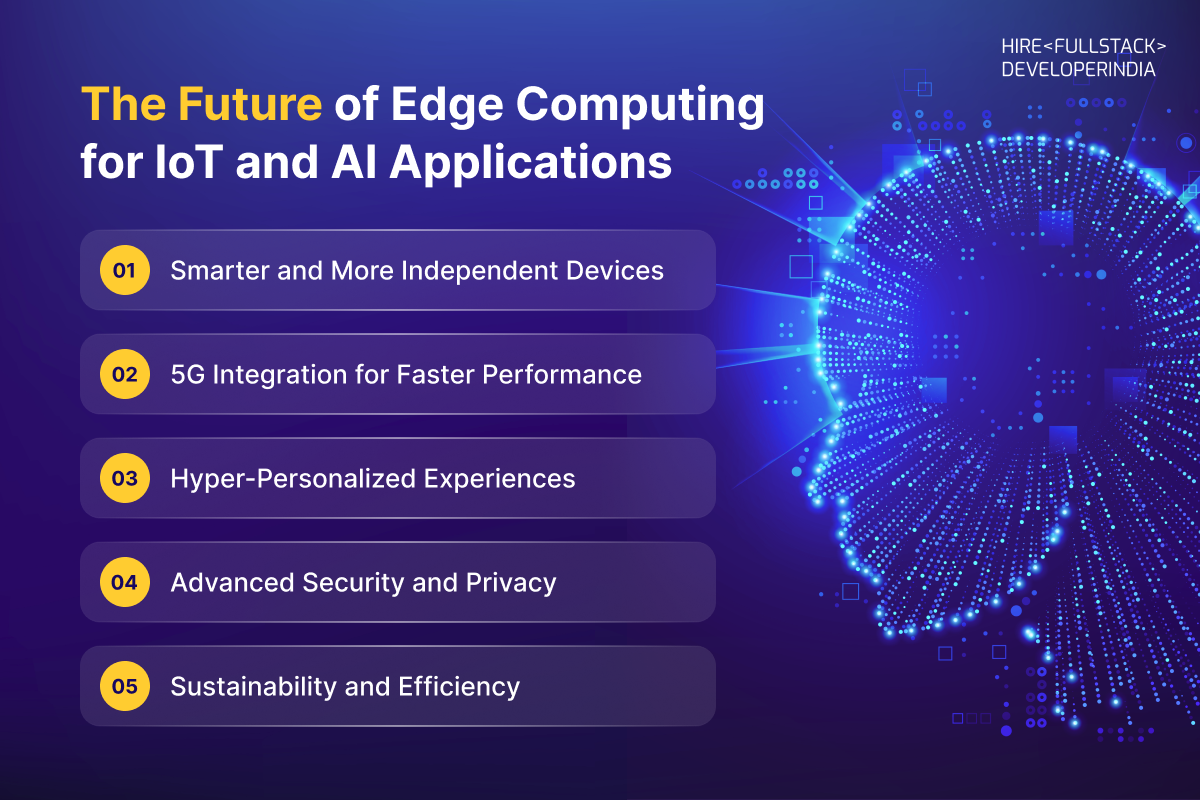
The future of smart technologies is moving toward decentralization, where intelligence is distributed across multiple devices instead of being stored and processed in one central system. This shift is making our digital world more efficient, faster, and secure. As AI models become smaller and more powerful, and IoT devices continue to advance, edge computing is set to play an even greater role in how modern systems function.
Here’s what we can expect in the near future:
1. Smarter and More Independent Devices
Everyday objects like cars, appliances, cameras, and wearables will soon be able to make decisions on their own using built-in AI. For instance, your refrigerator could analyze food freshness, your car could detect safety hazards instantly, and your smartwatch could monitor your health in real time — all without relying on the cloud.
2. 5G Integration for Faster Performance
The rollout of 5G networks will take edge computing for IoT and edge computing for AI applications to the next level. With ultra-fast connectivity and lower latency, 5G will make it possible to connect millions of devices seamlessly. This will unlock innovations in smart cities, autonomous vehicles, and industrial automation, where every millisecond matters.
3. Hyper-Personalized Experiences
In the future, edge AI will enable more personalized interactions in sectors like retail, healthcare, and entertainment. Stores could provide instant product recommendations, healthcare apps could adjust treatment suggestions based on real-time patient data, and streaming platforms could tailor content to individual preferences on the spot.
4. Advanced Security and Privacy
With increasing cyber threats, on-device AI will help detect, analyze, and respond to security risks locally — before they spread to the network. This will make connected environments like smart homes, offices, and vehicles much safer.
5. Sustainability and Efficiency
Edge computing will also drive green innovation. By processing data locally, it reduces energy use and network strain, making technology both smarter and more eco-friendly.
Final Thoughts
Edge computing is not just a technical upgrade — it’s a practical shift in how devices and systems handle information. By keeping data processing closer to where it’s generated, edge computing supports faster responses, safer data handling, and more reliable operations. Combined with IoT and AI, it enables real-time intelligence that businesses can truly depend on.
Whether you’re a startup building smart home devices or an enterprise optimizing industrial systems, adopting edge AI development can open the door to efficiency and innovation. And if you’re planning to start, it’s wise to Hire AI Developers who understand how to bring together IoT, AI, and edge technologies to create intelligent solutions that perform at their best — anytime, anywhere.