.png?w=1920&q=75)

The amount of data the world produces today is massive, and it is growing every single second. Every click we make on a website, every online purchase, every banking transaction, every social media photo uploaded, and even the health data collected from smart watches adds to the never-ending pool of information. Ten years ago, storing data was simpler. Most companies would buy physical servers and store everything inside their office. But times have changed. Technology has changed. And business expectations have changed too.
In 2026 and beyond, companies don’t just want to store data — they want to analyze it in real time, use it for decision-making, apply AI on top of it, and keep it secure, all at once. This shift has pushed organizations to rethink how they manage data. As a result, we are now seeing a major move towards hybrid setups where businesses combine their physical on-premise storage with cloud storage. This is what we call a hybrid environment, and it is becoming the new normal.
In this blog, we will explore how Data Warehousing and data lakes will evolve in hybrid systems by 2026, why they matter, and how businesses can prepare for the future. We will also discuss the importance of Hybrid cloud data architecture, key data management trends, and why companies need to Hire Database Managers skilled in modern and traditional data systems.
Why Is Data So Important Today?
Every business, small or large, runs on information. Without the right data at the right time, companies cannot make good decisions. For example:
An ecommerce store needs user browsing and purchase data to recommend the right products.
- A bank needs transaction data to detect fraud.
- A hospital needs medical records and reports to treat patients safely.
- A logistics company needs delivery data to plan routes and reduce delays.
- Smart cities need traffic and sensor data to manage roads and utilities.
So even if you are not a technical person, it is easy to understand that data is the fuel of modern business. But storing it properly and using it correctly is not as simple as it sounds.
That’s why data storage systems evolved into data warehouses and data lakes.
Before we go into the future, let's refresh what they are, in very simple language.
What Is a Data Warehouse?
A data warehouse is like a perfectly organized office filing system. Every file has a label. Every folder has a category. Everything is neat, clean, structured, and easy to search.
In technical terms, a data warehouse stores clean, structured, and organized data that is mostly used for:
- Business reports
- Charts and dashboards
- Understanding past performance
- Decision-making by managers
For example:
- A sales team tracks monthly sales.
- A bank monitors loan performance.A retailer analyzes which products sold most this
- year.
Data warehouses are fantastic for trusted, accurate business insights. That is why data warehousing has been a crucial part of business technology for decades.
However, the drawback is that data must be cleaned and formatted before storing — like sorting documents before filing.
What Is a Data Lake?
Now imagine instead of organizing files first, you just dump everything into one big storage room — documents, photos, videos, voice recordings, everything.
That’s what a data lake does. It stores raw, unorganized, unstructured data such as:
- Text logs from apps
- Video files
- Sensor signals from machines
- Social media text data
- Website click-tracking data
A data lake is especially useful for:
- AI (Artificial Intelligence)
- Machine learning
- Advanced analytics
- Real-time monitoring
So in nutshell:
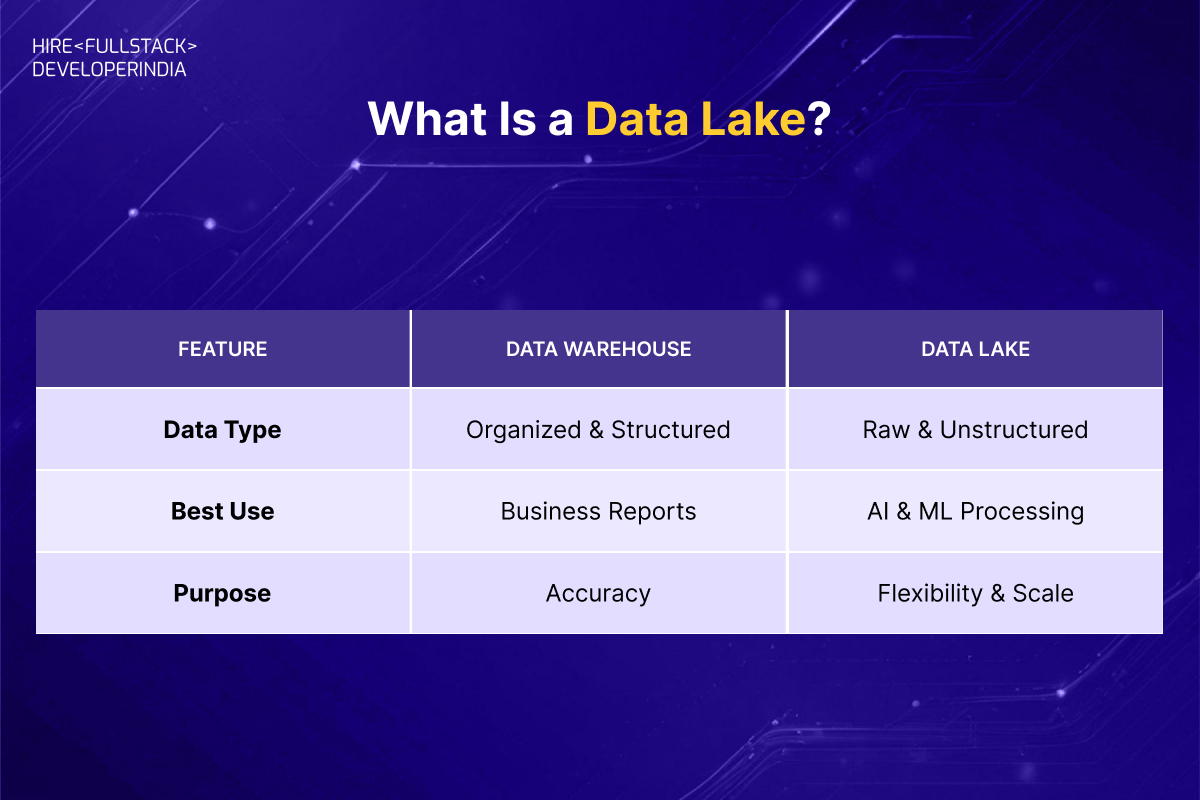
Both are important, but modern businesses need both together, not one or the other.
Why Hybrid Data Systems Are Becoming the Future
Earlier, businesses used to debate a lot — Should we put our data on the cloud or keep it inside our own office servers? But today, the answer has changed. Now companies have realised that they don’t need to choose one — they need both. And that’s where hybrid data systems come in.
A hybrid system means you use:
- Cloud storage for flexibility, speed, and large-scale data
- On-premise servers (office servers) for sensitive and critical information
- This balanced approach is becoming the future of data storage and data use.
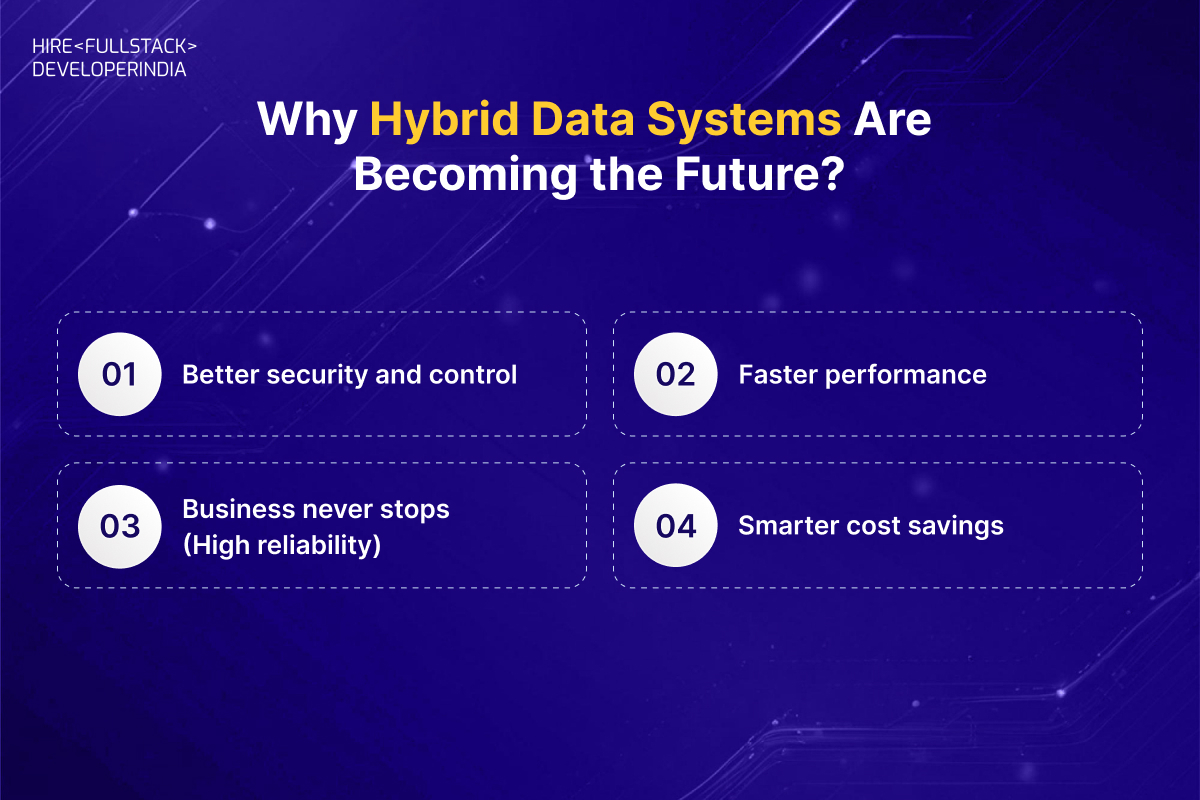
Here’s why hybrid systems are becoming so popular:
Better security and control
- Some data is too sensitive — like customer details, financial info, or core business files.
- That data stays safely in office servers (on-prem)
- Less sensitive or everyday data goes to the cloud
- This way companies get both control and flexibility, without risking security.
Faster performance
- Different tasks need different speeds.
- Cloud can handle heavy processing and large workloads
- Local servers easily handle day-to-day office work
- This mix gives smoother performance and avoids system slowdowns.
Business never stops (High reliability)
- If one system goes down, the other keeps running.
- So, even during outages or cyber issues, business does not stop.
- This is super important for companies that run 24/7 — like banks, hospitals, or e-commerce platforms.
Smarter cost savings
- Not all data needs expensive high-security space.
- Keep only the most important data on-prem
- Send long-term, less urgent, or large data to the cloud (which is usually cheaper)
This helps companies save money while still staying safe and fast.
In simple words, a hybrid cloud data architecture means keeping your most important and sensitive data safely stored in your office systems, while moving everything else to the cloud for faster access and easier growth. Think of it like having a secure locker at home for your most precious items, and also using online storage for everyday files. This combination gives you both safety and flexibility at the same time. Because of this balanced approach, hybrid systems are no longer just a trend — they are clearly becoming the future of modern data management, helping businesses stay secure, scalable, and always ready for change.
Latest Data & Hybrid-Cloud Related Marketing Statistics
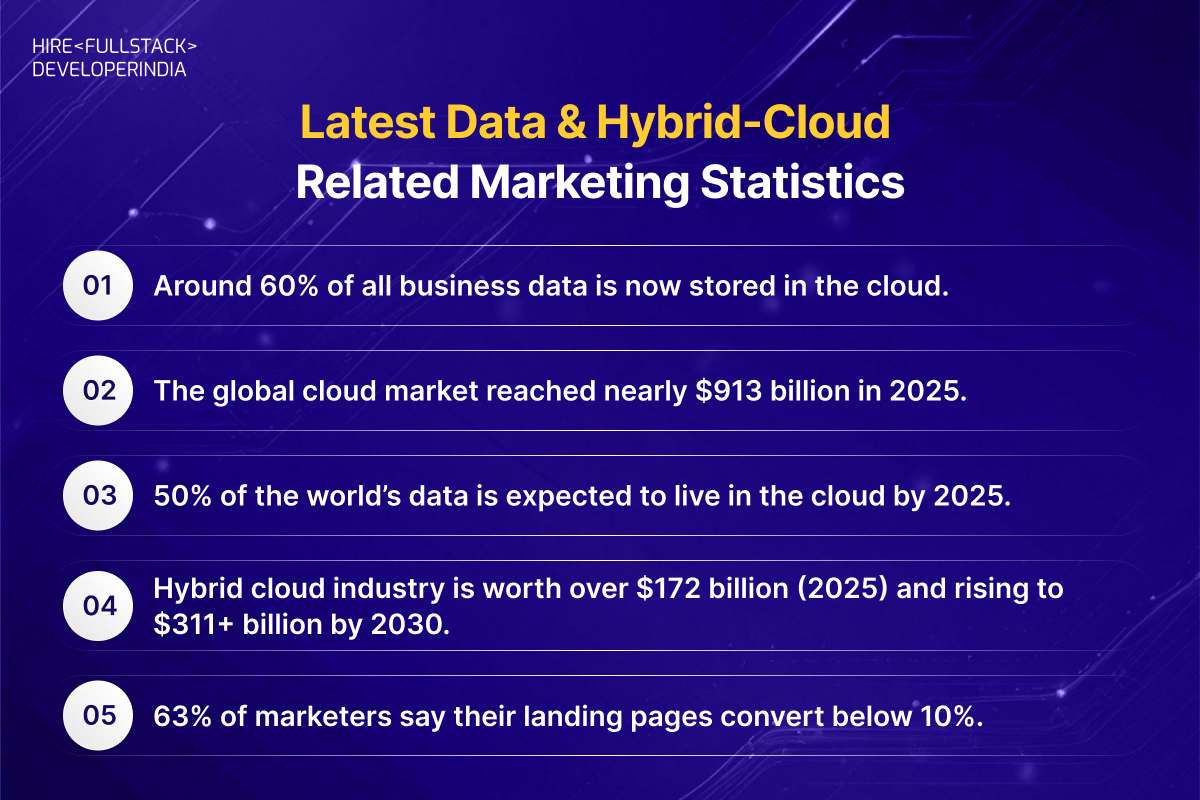
Around 60% of all business data is now stored in the cloud.
This shows that most companies have already shifted to cloud storage, so mixing on-premise and cloud systems (hybrid environments) is becoming normal.
The global cloud market reached nearly $913 billion in 2025.
This huge growth means companies are spending big money on cloud technology, making data warehousing and cloud data management more important than ever.
50% of the world’s data is expected to live in the cloud by 2025.
With half of all data moving to the cloud, businesses need smart systems that let them use both local and cloud data together smoothly (hybrid cloud data architecture).
Hybrid cloud industry is worth over $172 billion (2025) and rising to $311+ billion by 2030.
This proves hybrid systems are not just a trend — they’re the future for handling data safely and efficiently.
63% of marketers say their landing pages convert below 10%.
This shows many businesses still struggle to turn data into real results — better data management, clean data pipelines, and strong data warehousing can help improve decision-making and conversions.
Data Trends Changing the World by 2026
Data is becoming the heart of every business, and the systems we use to manage it are evolving rapidly. By 2026, companies will lean heavily on advanced technology, AI-based platforms, and automated systems to run their operations smoothly. Here are the top data trends you can expect to see shaping the future of business.
1. AI Will Run Most Data Operations
Artificial intelligence will do much more than just read reports. It will become a smart assistant for data teams. Instead of people spending hours cleaning messy data or fixing errors, AI will take care of these tasks automatically. It will clean large data sets, organize information neatly, detect mistakes instantly, suggest corrections, and even generate reports whenever needed. This means data teams will spend less time doing manual work and more time focusing on strategy, analysis, and innovation.
In short, AI will act like an intelligent data manager, making work faster, easier, and more accurate.
2. Real-Time Insights Will Become the New Normal
Businesses no longer want to wait hours or days for reports. Decisions need to be made instantly. That’s why real-time data processing will become standard. For example, e-commerce websites will continue to show instant product recommendations to shoppers, and banks will detect fraud in real time instead of after the damage is done.
Real-time insights will help companies move faster, serve customers better, and stay ahead of competition.
3. Lakehouse Architecture Will Go Mainstream
Most companies today use either data warehouses (for structured data) or data lakes (for raw, mixed data). By 2026, a new approach — called Lakehouse architecture — will dominate. It combines the best features of both systems:
Flexibility to store all types of data
Organized structure to create clean business reports
This model is more efficient and powerful, and leading tech giants like Snowflake, Databricks, and Google are already building strong lakehouse systems. This will help businesses unify their data on one platform instead of juggling multiple tools.
4. Edge Computing + Cloud Will Work Hand-in-Hand
Many industries — like manufacturing plants, hospitals, cars, and IoT devices — need immediate processing on the spot. This is where edge computing comes in. Instead of sending everything to the cloud first, devices will analyze important data locally in real time and then send results or backups to the cloud.
This approach brings huge benefits:
- Faster decision-making
- Higher reliability
- Less network load and cost
For example, a self-driving car cannot wait for cloud servers to respond — it must process information instantly at the edge.
5. Rise of Self-Service Dashboards
You won’t need to be a data expert to get business insights anymore. Self-service dashboards and language-based search tools will change the way business users work. Anyone — even without technical training — will be able to ask simple questions like:
“Show me this month’s top-selling products.”
And the system will display results instantly. This democratizes data, meaning more people inside a company can make smart decisions quickly without waiting for the IT or data team.
6. Stronger Security & Data Privacy Requirements
As data grows, so do risks. Cyberattacks and data theft are major threats, and governments across the globe are tightening rules to protect customer information. Businesses will need strong security systems, including encryption, strict access controls, activity logs, and continuous compliance checks.
Data protection will no longer be just a technical concern — it will become a critical business requirement. Companies that fail to secure their data may face legal issues, heavy fines, and loss of trust.
How Data Warehouses Will Evolve by 2026
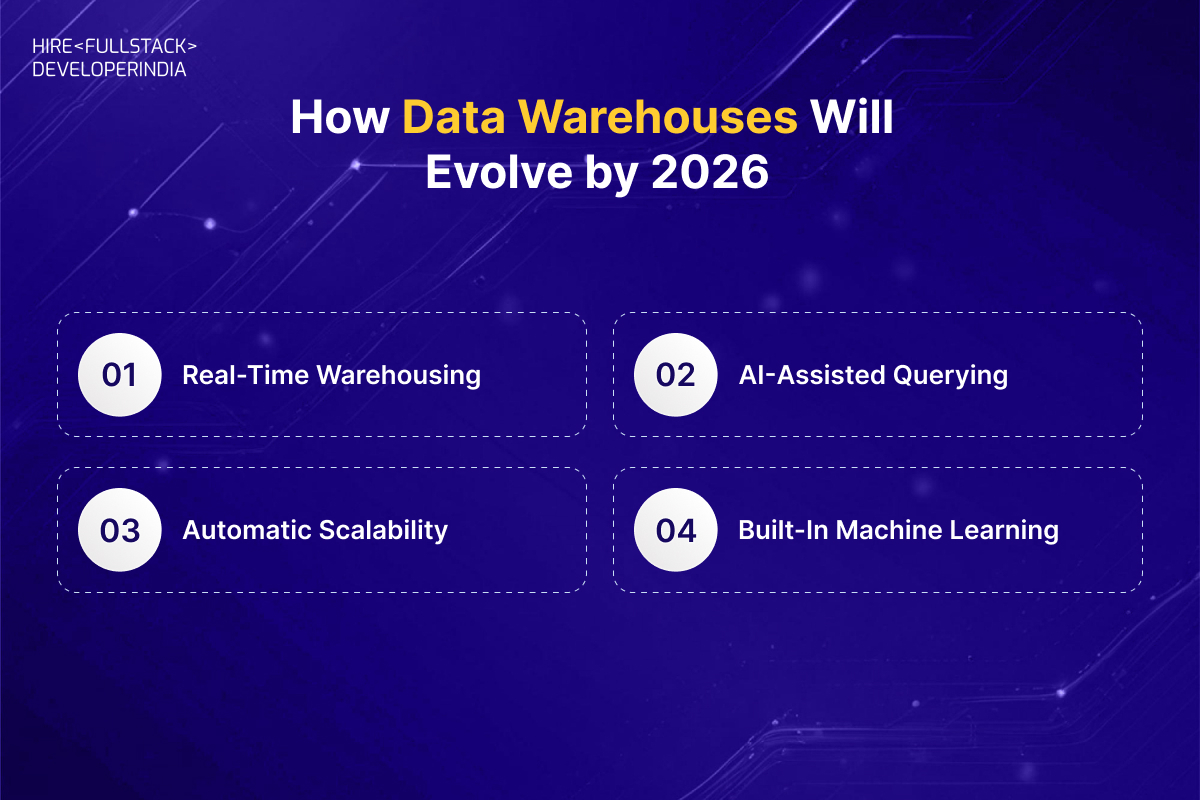
Modern data warehouses will change dramatically. Here’s what we will see:
Real-Time Warehousing
Traditional systems used to refresh data once a day or even once a week, which meant teams had to wait for updates before making decisions. In the future, data will refresh continuously in real time, allowing businesses to access the latest information instantly. This means companies can respond to customer needs faster, track performance live, and catch issues the moment they happen — not hours later.
AI-Assisted Querying
Writing and optimizing database queries has always required technical skill. But going forward, AI will help handle this work automatically. The system will understand what the user wants, suggest faster query methods, and even fix inefficient queries on its own. This not only improves performance but also makes data access easier for non-technical teams, reducing dependency on developers for every request.
Automatic Scalability
System load changes every day — sometimes there is heavy usage, and sometimes it is quiet. In the coming years, data warehousing platforms will scale themselves automatically. When usage increases, the system will expand to handle more work. When activity drops, it will scale down to save money. This ensures smooth performance without wasting resources, making the system both powerful and cost-efficient.
Built-In Machine Learning
Data warehouses are becoming more than storage systems — they are evolving into complete intelligence platforms. Future warehouses will include user-friendly machine learning tools that allow data teams to run predictions and build models directly inside the system. There will be no need to export data to other platforms, which saves time, improves security, and gives faster results.
Data warehousing is not going away — in fact, it is becoming more advanced and essential than ever. The future brings systems that are faster, smarter, and far more automated, helping organizations work efficiently, scale smoothly, and make decisions in real time.
How Data Lakes Will Evolve by 2026
Data lakes are also growing smarter and more powerful as technology improves. Earlier, they were mainly used to store large amounts of raw data, but in the future, they will help companies use that data in meaningful ways. Let’s see how they are expected to change by 2026:
AI-Organized Data
In the past, data lakes were often messy because they stored everything without structure. By 2026, AI will clean and organize that data automatically. It will tag files, categorize information, and create helpful labels so teams can easily find what they need. No more digging through unorganized data — AI will act like a smart librarian.
Faster Query Performance
Data lakes used to be slow when it came to searching or running queries. That’s changing. Next-gen data lakes will allow users to search and filter massive datasets within seconds — almost as fast as modern data warehouses. This makes them useful not only for storage but also for day-to-day analysis and decision-making.
Automatic Data Lineage Tracking
Understanding where data comes from and how it changes over time is very important. Future data lakes will automatically track the full data journey — from source to storage to every transformation. This gives businesses more transparency and helps prevent confusion or reporting mistakes.
Zero-Trust Security
Security will become stricter. Zero-trust architecture means nobody gets access by default, not even internal employees. Every user and every system must prove its identity and permissions. This reduces the risk of data leaks or misuse and keeps sensitive information safe.
Data lakes will continue to store massive amounts of raw data, but they won't just act like big buckets anymore. They will become organized, intelligent, fast, and secure — allowing companies to not only collect data but also understand and use it effectively.
The Rise of the Lakehouse — One System to Rule Both
Lakehouse architecture combines the best of both:
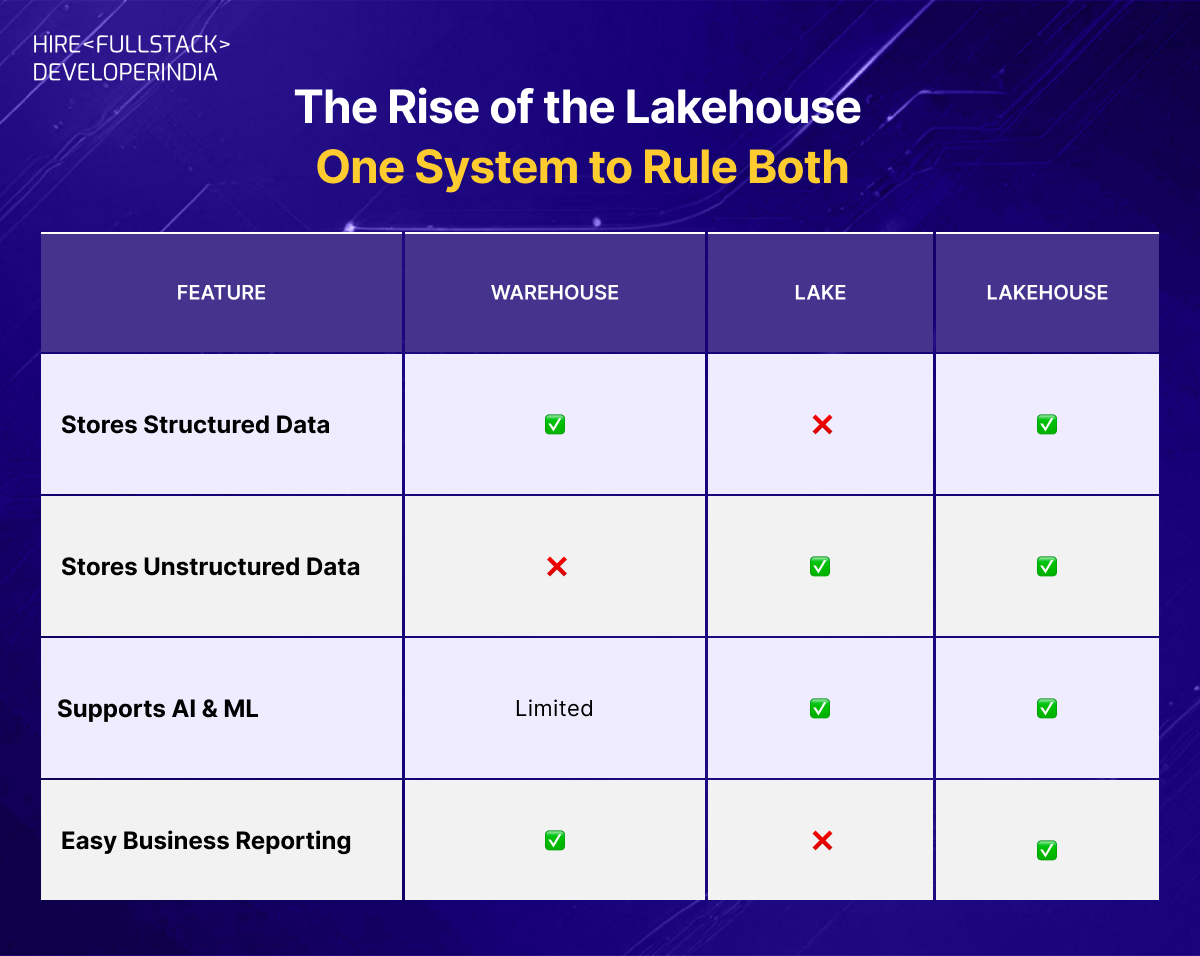
Companies no longer need separate data systems — they can choose one powerful platform. This dramatically reduces cost and complexity.
Why Every Business Needs Hybrid Cloud Data Architecture
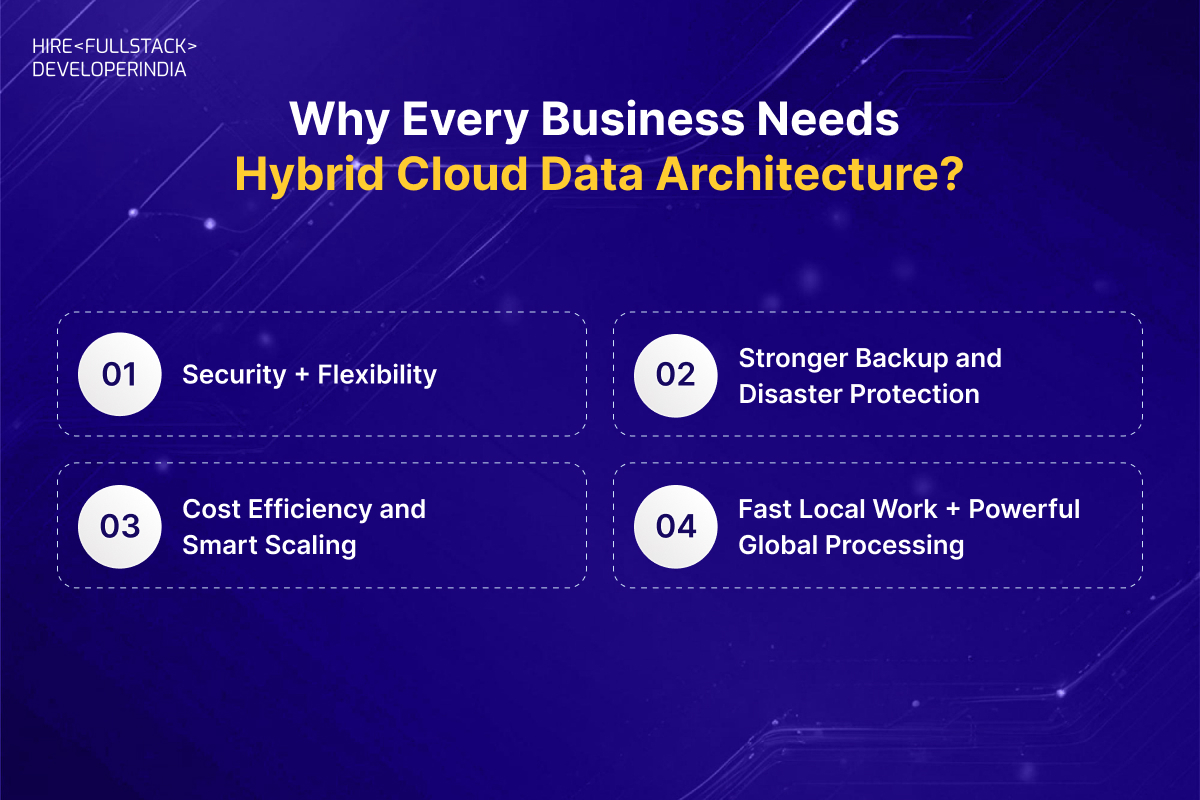
Security + Flexibility
Some data needs extra protection — like health reports, bank records, or confidential government data. That sensitive information stays on-premise where the organization has full control. Meanwhile, big data, analytics data, and AI workloads go to the cloud, where storage and computing power can grow easily as needed.
This setup keeps sensitive data safe while still letting businesses innovate using powerful cloud technologies.
Stronger Backup and Disaster Protection
No system is perfect — even the best cloud service can experience downtime, and local servers can fail too. With a hybrid setup, if the cloud faces issues, the local system keeps running. And if the local server goes down, the cloud takes over.
This means business never stops, and data remains available even in emergencies.
It’s like having both a hard drive and online backup — double safety, peace of mind.
Cost Efficiency and Smart Scaling
Traditional infrastructure requires companies to invest in big, expensive servers whether they use them fully or not. Hybrid systems solve this problem.
You only pay for cloud resources when you use them — and when demand drops, costs drop too. Meanwhile, essential data stays on local servers, saving recurring cloud fees.
This makes hybrid cloud architecture budget-friendly, especially for growing businesses.
Fast Local Work + Powerful Global Processing
Modern companies serve users across cities and even countries. Hybrid systems help balance speed and intelligence:
- Local/Edge devices process urgent, real-time tasks (like store billing, factory sensors, and hospital monitors)
- Cloud systems run advanced analytics, AI models, and global data insights
This way, businesses can be fast on the ground and powerful in the cloud.
Who Benefits from Hybrid Data?
Almost every industry can gain from hybrid cloud data architecture, including:
- Startups — scale quickly without huge upfront cost
- Enterprises — handle global operations and security needs
- Government agencies — keep sensitive data secure
- Banks & Finance companies — protect customer data while using AI for fraud detection
- Hospitals & Healthcare — store patient data safely while using AI for diagnosis and records
- Retail & e-commerce — manage real-time transactions and customer insights
In short, hybrid systems support modern business growth, protect data, reduce cost, and prepare companies for the future.
Skills & Roles Needed for the Future
To manage modern data systems, companies must build strong data teams.
Key skills include:
- Cloud databases (AWS, Azure, Google Cloud)
- SQL and NoSQL systems
- Data pipeline automation
- Data security
- AI-assisted analytics
- Data governance and compliance
- Real-time stream processing
And most importantly: Companies must Hire Database Managers who understand both traditional databases and cloud-based systems. Without the right talent, even the best tools will fail.
Top Tools Leading the Future
Cloud Platforms
- Amazon Redshift, Lake Formation
- Google BigQuery
- Azure Synapse & Microsoft Fabric
Lakehouse Systems
- Snowflake
- Databricks Lakehouse
Open-Source Frameworks
- Apache Hudi
- Delta Lake
- Apache Iceberg
These platforms help companies store, analyze, and secure data at scale.
Challenges in the Hybrid Future
Even though hybrid data systems are powerful, they also bring challenges:
- Managing costs of cloud storage and compute
- Handling data movement between environments
- Ensuring security across multiple systems
- Hiring skilled professionals
- Integrating new technologies with old ones
- Businesses must plan properly to avoid complexity.
How Companies Can Prepare for 2026
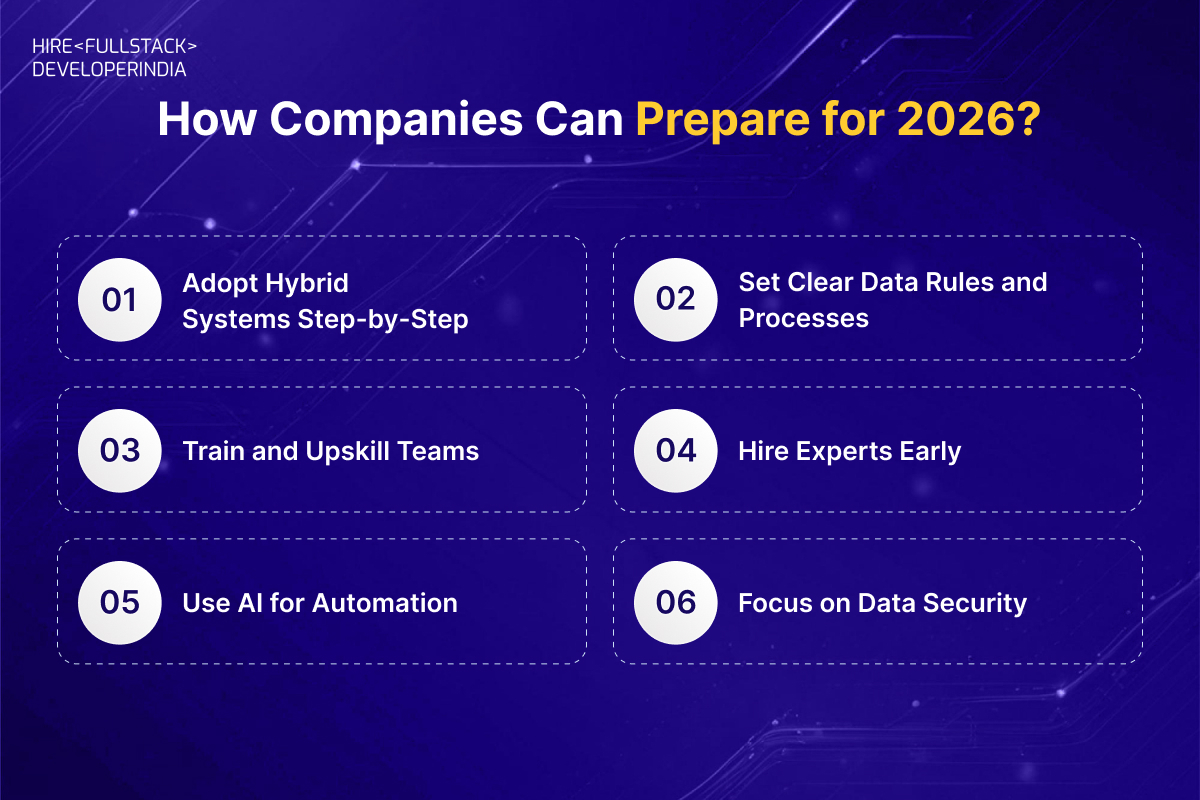
As data systems evolve, businesses need to stay ready and move with the change. Preparing early will make the transition easier and help companies stay competitive. Here’s how organizations can start getting ready today:
Adopt Hybrid Systems Step-by-Step
There’s no need to shift everything overnight.
Companies should start small — maybe move non-critical workloads or simple applications to the cloud first. Once they get comfortable, they can slowly add more systems.
This step-by-step approach reduces risk and makes the process smoother for teams.
Set Clear Data Rules and Processes
Good data needs good discipline.
Companies must create strong rules for:
- How data is stored
- Who can access it
- How data quality is checked
- How security is maintained
This is called governance. With proper governance, data stays clean, safe, and reliable.
Train and Upskill Teams
Technology changes fast, and employees need to keep learning.
Businesses should invest in training for data tools, cloud systems, and analytics platforms. When teams understand new technology, they work smarter and faster.
Even a few workshops or online courses can make a big difference.
Hire Experts Early
Future-ready companies are already building strong data teams.
Hiring experienced database managers and cloud specialists today helps companies avoid mistakes later and grow confidently.
Businesses that Hire Database Managers in advance will have better planning, better security, and better results when hybrid systems become standard everywhere.
Use AI for Automation
AI tools can do boring and repetitive tasks like:
- Cleaning data
- Sorting information
- Running quick checks
- Preparing reports
By using AI, companies save time and allow their staff to focus on meaningful work like analysis, decision-making, and strategy.
Focus on Data Security
Data is valuable, so it must be protected carefully. Companies should use strong security measures like:
- Encryption (locking data)
- Role-based access (only right people see right data)
- Regular security checks
- Following industry compliance rules
Staying secure builds customer trust and protects the business.
To be ready for 2026, companies should start early, train people, adopt hybrid systems step by step, hire experts, use AI, and protect their data. The world is moving toward intelligent, connected, and secure data systems — and the businesses that prepare today will lead tomorrow.
Conclusion
The future of enterprise data is clear:
- Hybrid cloud data architecture will be the foundation.
- Data warehousing will become smarter and real-time.
- Data lakes will evolve into organized, AI-friendly systems.
- Lakehouses will dominate as unified data platforms.
- Data management trends like AI automation, edge computing, and security-first systems will transform business.
- Companies that Hire Database Managers with hybrid and cloud skills will stay ahead of the competition.
In 2026 and beyond, data will not just support business decisions — it will drive innovation, automation, intelligence, and growth. Companies that build strong data foundations now will lead tomorrow. Those who delay will struggle to catch up.