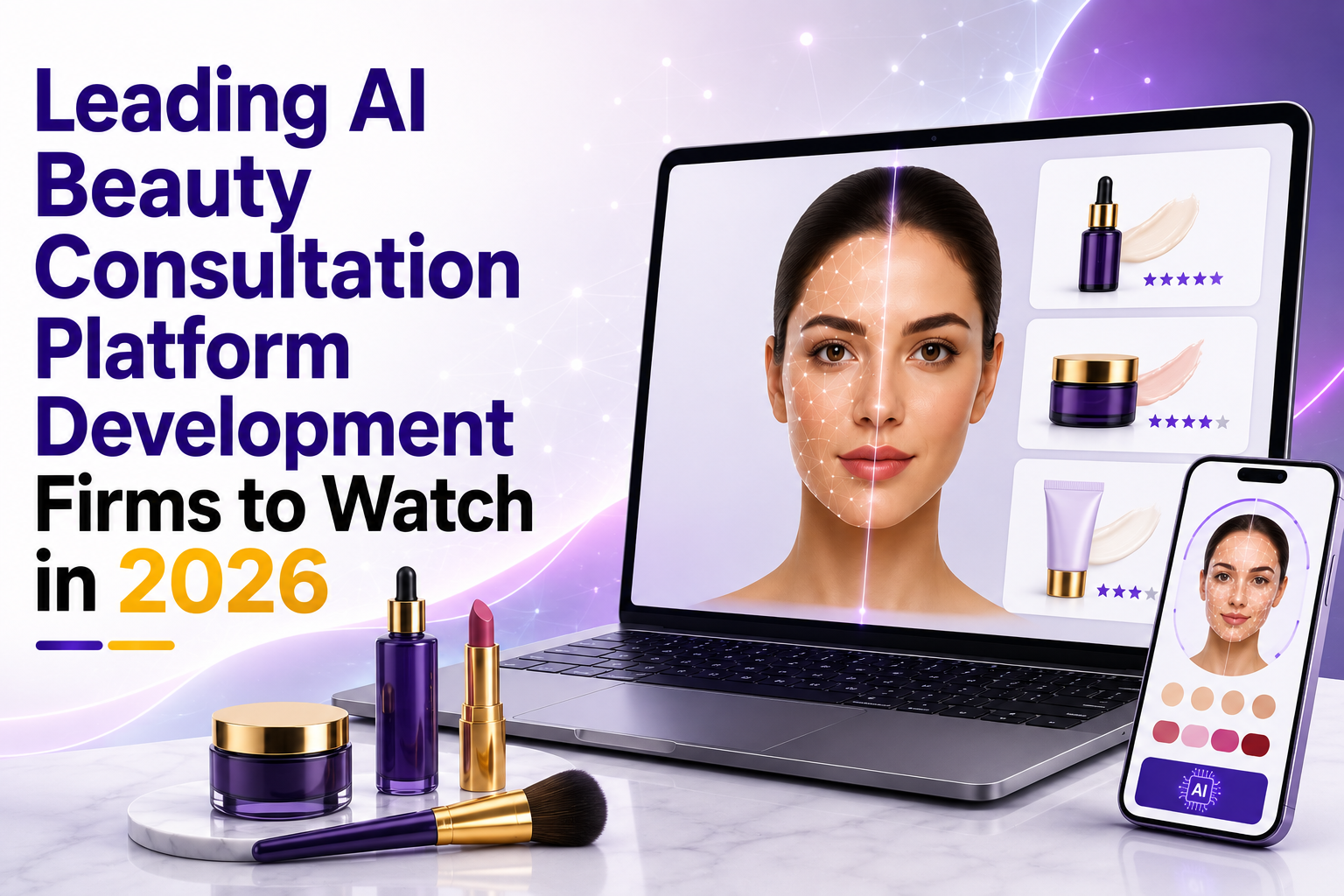
If you have spent any time scrolling beauty apps lately, you have probably noticed something. Fewer of them ask you to pick a shade from a swatch chart. More of them scan your face, read your skin tone, and tell you exactly what will actually work for you. That shift did not happen by accident. Behind almost every one of these smart recommendation engines sits a development team that specializes in building what the industry now calls an AI Beauty Consultation Platform, software that blends computer vision, skin analysis, and personalization to replace the guesswork that used to define online beauty shopping.
For a founder or a brand owner looking to build something similar, the challenge is not convincing anyone that AI belongs in beauty. That argument is already won. The real challenge is finding a development partner who understands the difference between a chatbot with a beauty theme and a genuine AI Beauty Consultation Platform capable of analyzing skin tone, detecting concerns like acne or pigmentation, and recommending products with enough accuracy that customers actually trust it.
This list is built for exactly that decision. We looked at 20 AI Beauty Consultation Platform companies that build these platforms today, from teams that specialize purely in skincare diagnostics to full stack studios that can take a beauty brand from a rough idea to a working app in a matter of months. Whether you run a DTC skincare label, a salon chain, or a cosmetics marketplace, you will find a partner here that fits your budget, your timeline, and your technical needs.
What Separates a Strong AI Beauty Consultation Platform From a Weak One
Before comparing companies, it helps to know what actually separates a good platform from a mediocre one.
Skin analysis accuracy matters most. The best platforms use computer vision models trained on large, diverse image sets so recommendations work across skin tones, ages, and lighting conditions, not just for the demographic the model happened to be trained on.
Product matching depth is the second differentiator. A platform that just suggests a hydrating serum in general terms is not doing much. A platform that cross references your skin data against an actual product catalog and explains why a specific formula fits your concerns is doing the job that an AI Beauty Consultation Platform actually exists to do.
Data privacy is not optional. These platforms process facial images and health adjacent data, so any development partner you choose needs real experience building with GDPR, relevant health data rules, and secure image handling in mind.
Finally, integration matters. A platform is only useful if it plugs cleanly into your existing e-commerce stack, CRM, or point of sale system without months of custom rework.
Pricing structure is worth understanding early too, since it shapes how you scope the project. Some firms quote a fixed price for a defined feature set, which works well once you already know exactly what you want to build. Others work hourly or on retainer, which suits brands that expect the feature list to change as real users start interacting with the app. Neither model is inherently better, but mismatching your stage of development with the wrong pricing structure is a common reason projects run over budget.
HireFullStackDeveloperIndia gives beauty brands access to full stack teams that can own both the front end consultation interface and the backend recommendation logic under one roof. That single team structure tends to reduce the communication overhead that comes from coordinating separate frontend and backend vendors, which is a common source of delay in AI heavy projects. Their developers are experienced with the machine learning integrations that power skin analysis, along with the e-commerce and payment logic beauty brands need to actually convert a consultation into a sale. Companies based outside India frequently choose them for the cost advantage without sacrificing communication quality, since the team works across hours that overlap with most Western clients. Many clients work with a dedicated pod of two to four developers rather than a rotating bench, which helps preserve context as the project moves from prototype to production.
Code Brew Labs builds custom AI beauty applications with computer vision powered skin diagnostics that work from a simple selfie. Their platforms are known for handling shade matching and skin tone analysis with enough precision that customers feel confident buying products online instead of guessing in a physical store. They build systems from scratch rather than reselling a templated solution, so brands get a proprietary system tied to their own catalog and customer data. Beauty retailers considering a virtual try on or diagnostic feature often start their research with Code Brew Labs because of their track record with visual AI specifically, as opposed to general purpose app development. Projects generally fall into the mid to high end of the market given the custom computer vision work involved, so this fits brands with a reasonably confirmed budget rather than an early stage idea.
The NineHertz has built a reputation for salon and beauty apps that go beyond scheduling. Their development work covers AI driven skincare recommendations, automated booking, and virtual try on features layered onto a single platform. For brands that want one app to handle both the consultation experience and the operational side of running a salon or spa chain, The NineHertz offers a combined approach rather than separate systems that need to be stitched together later. Their team also handles inventory and multi location management, which matters for beauty businesses operating more than one storefront. They typically deliver across both iOS and Android from a shared codebase, which keeps maintenance simpler once the app is live.
As the name suggests, Backend Development Company focuses on the infrastructure side of AI beauty platforms rather than the front end alone. That matters more than most founders expect, because a skin analysis feature that looks impressive in a demo can fall apart under real traffic if the backend cannot handle image processing at scale. Their team builds the APIs, model hosting, and data pipelines that keep recommendation engines fast and reliable even as a beauty app grows from a few hundred users to a few hundred thousand. Brands that already have a design or front end partner often bring in Backend Development Company specifically to strengthen the technical foundation underneath. Their engineers pay close attention to API response times and uptime, since a slow skin analysis result is often enough to make a customer abandon the consultation entirely.
5. Suffescom Solutions
Suffescom Solutions builds on demand beauty and salon apps with AI chatbots built in for instant customer support alongside booking and payment features. Their approach leans toward marketplace style platforms that connect multiple salons or beauty professionals to customers in one place, complete with real-time booking and multi vendor management. They also work with brands that want to integrate large language model based agents into an existing app rather than starting from zero, which shortens timelines for businesses that already have a functioning platform but want to add AI features. For marketplace style builds, they also help structure commission logic between the platform and participating salons, which founders often underestimate during initial planning.
6. Idea2App
Idea2App specializes in salon and beauty applications built around IoT connected devices and on demand service models. Their platforms typically include separate panels for customers and salon administrators, so business owners can manage staff schedules and track performance while customers get a smooth booking and consultation experience on their end. Idea2App tends to attract clients who want a fully custom build rather than a white label product, and their consultation process at the start of a project helps founders scope out features before committing to a full development timeline. Their IoT work has included connecting apps to in salon devices like smart mirrors, giving customers a consultation experience that spans both digital and in person touchpoints.
7. Hourly Developers
Hourly Developers works differently from most agencies on this list. Instead of locking you into a fixed project scope, they let you hire vetted AI and mobile developers on an hourly or dedicated basis, which suits beauty brands that want to build an AI Beauty Consultation Platform gradually, test features with real users, and adjust the roadmap as they learn. Their developers have handled computer vision integrations, skin analysis models, and e-commerce connections for beauty clients, and the hourly structure keeps costs transparent since you only pay for actual development time. This model works particularly well for brands that already have a rough idea of what they want but need flexible technical support to get there without committing to a rigid multi month contract upfront. Typical hourly rates sit in the mid range compared to fixed scope agencies, which makes budgeting easier when the feature list is still evolving.
8. Biz4Group
Biz4Group brings broader AI expertise to beauty specifically, having built AI model development, chatbot systems, and automation tools across several industries before applying that experience to skincare and salon recommendation engines. Their platforms typically suggest hair colors, spa treatments, or skincare routines based on a learning model that improves as it processes more customer data. For brands that want a technology partner with AI experience beyond just beauty, in case the roadmap later expands into adjacent automation or chatbot features, Biz4Group offers that wider bench of expertise. Their client roster spans healthcare, retail, and logistics in addition to beauty, so the automation patterns they bring over often solve problems a beauty focused agency has not encountered before.
9. Konstant Infosolutions
Konstant Infosolutions has years of experience building custom software for startups through to large enterprises, and their beauty salon app work includes appointment scheduling, CRM, loyalty programs, and multi location management alongside the AI consultation layer. Their cross platform development and cloud based architecture make them a solid fit for beauty brands planning to scale across regions rather than launching in a single market. Businesses that need enterprise grade reliability from day one, not just a minimum viable product, tend to gravitate toward Konstant because of their enterprise client history. The company has been operating for well over a decade, and that longevity shows up in how thoroughly they document architecture decisions, which matters if you plan to bring development in house later.
10. HireAIDevelopers
HireAIDevelopers focuses specifically on the machine learning side of beauty platforms, which is the part most general app development shops struggle with. Their developers build and train the computer vision models that actually perform skin tone detection, blemish identification, and product matching, rather than treating AI as an afterthought bolted onto an existing app. Brands that already have a design and app shell in place but need someone to build the actual AI Beauty Consultation Platform intelligence behind it often bring in HireAIDevelopers as a specialized technical partner rather than replacing their existing team. Their engineers typically work with convolutional neural networks and transfer learning techniques, adapting pretrained computer vision models to beauty specific tasks rather than training everything from a blank slate.
11. Space-O Technologies
Space-O Technologies has been building custom mobile applications since 2010, with a portfolio spanning iOS and Android apps across many industries including beauty and wellness. Their process covers design, development, testing, and ongoing support, which appeals to founders who want one vendor accountable for the entire lifecycle of the app rather than juggling multiple contractors. Their long track record and global client base give them experience handling the kind of edge cases that only show up after an app has been in the market for a while. Founded in 2010, the company has shipped apps across dozens of industries, and that breadth means they rarely encounter a technical requirement they have not solved in some form before.
12. Octal IT Solution
Octal IT Solution builds skincare and beauty apps with AI based skin analysis, personalized routine recommendations, and reminder systems that keep users coming back to the app between purchases. Their development process puts a strong emphasis on testing across devices to avoid the compatibility issues that often surface after launch, which matters for beauty apps since customers frequently photograph themselves in inconsistent lighting and expect the analysis to still work. Brands prioritizing a polished, bug free launch over the fastest possible timeline often find Octal's thorough testing approach worth the tradeoff. Their QA process typically covers a wide range of device and camera combinations, which catches the kind of inconsistent skin tone readings that only show up on certain phone models.
13. Adequate Infosoft
Adequate Infosoft builds beauty and salon consultancy apps centered on live video consultations with real beauty experts alongside the AI layer, giving customers the option to combine automated skin analysis with a human opinion when they want extra reassurance. Their platforms also support direct product purchases from participating salons, turning the consultation into a complete transaction rather than just an advisory step. This hybrid model, part AI and part human expert, is worth considering for brands that want to build trust gradually rather than asking customers to rely entirely on automated recommendations from day one. Their booking flow lets customers schedule a video consultation slot directly after receiving an initial AI reading, which keeps the human follow up from feeling like a separate, disconnected step.
14. Topflight Apps
Topflight Apps has built beauty platforms for healthcare adjacent brands, drawing on their broader experience in health tech to bring extra rigor to how they handle sensitive user data and visual information. Their portfolio includes AI powered skincare and cosmetic consultation apps built for companies that needed both a strong user experience and a defensible approach to data privacy. Beauty brands operating in categories that brush up against medical claims, like acne treatment or anti aging, often value Topflight's health tech background because it shows in how carefully they handle compliance. Past projects in this space include consultation apps built for skincare and cosmetic brands where compliance review was baked into every sprint rather than handled as a final step before launch.
15. APPWRK IT Solutions
APPWRK IT Solutions has delivered mobile apps for beauty and salon clients across multiple countries, with a track record that spans on demand booking platforms, AI powered recommendation features, and immersive AR try on experiences. Their team works across the full spectrum of beauty tech, from simple booking apps for independent stylists to more complex diagnostic platforms for skincare brands. Founders early in their planning process often start with APPWRK because of their willingness to scope smaller pilot projects before committing to a full build. They have delivered projects for clients across North America, Europe, and the Middle East, giving them experience adapting consultation flows to different regional expectations around beauty and modesty.
16. Sodabees
Sodabees builds salon and beauty applications with a focus on connecting customers to experts remotely, whether that means a skincare analysis, a makeup consultation, or general styling advice delivered through the app. Their platforms typically pair AI powered recommendations with integrated payment options, so the entire journey from diagnosis to purchase happens without customers leaving the app. Smaller beauty businesses and independent professionals looking for a straightforward, user friendly build without excessive complexity often find Sodabees a comfortable fit for their budget and timeline. They tend to work well with independent professionals and small studios who want a polished app without the overhead of a large enterprise style engagement.
17. Owebest
Owebest builds beauty and wellness apps that use AI to analyze user profiles, past interactions, and stated preferences to recommend personalized service packages and treatment plans. They also work with AR features that let users preview hairstyles, makeup looks, or skincare treatments before committing, which adds a visual confidence layer on top of the data driven recommendations. Their pricing tends to be positioned toward the more affordable end for brands that want AI features without an enterprise sized budget, making them a common choice for early stage beauty startups. Their client base spans several continents, and their pricing model tends to appeal to founders bootstrapping a first version before raising outside funding.
18. Appic Softwares
Appic Softwares has spent close to a decade focused specifically on skincare app development, which shows in how granular their user data tracking gets, covering skin type, specific concerns, and how customer engagement changes over time. Their delivery track record leans heavily toward on time, on budget completion, which matters for founders who have learned that AI projects can balloon in scope if a development partner is not disciplined about the initial specification. Brands that want a partner narrowly focused on skincare rather than beauty tech broadly tend to shortlist Appic early in their search. Roughly 95 percent of their delivered projects have shipped on schedule and within budget according to their own reporting, a track record that matters given how easily AI timelines can slip.
19. Digittrix Infotech
Digittrix Infotech approaches beauty app development as part of a broader digital transformation happening across the beauty industry, building platforms that combine live tracking, in app payments, and real-time reviews with the AI consultation layer. Their team keeps an eye on where the category is heading next, including AI driven skin diagnostics and blockchain based transparency features for product sourcing, which appeals to brands thinking a few years ahead rather than just solving today's problem. Founders who want a partner comfortable experimenting with newer technology alongside the core AI features often find Digittrix a good cultural fit. Their exploratory work with blockchain based sourcing transparency is still fairly early stage across the industry, so it suits brands that see supply chain transparency as part of their long term brand story.
20. Developer Bazaar Technologies
Developer Bazaar Technologies specializes in on demand service platforms broadly, with beauty and salon apps forming a significant part of their portfolio. Their process walks founders through the entire journey, from feature planning and cost breakdowns to monetization strategy, which is useful for first time beauty app founders who need more guidance than a purely technical vendor typically provides. They have handled projects for both startups building their first app and larger enterprises expanding an existing beauty business into digital services, giving them range across company sizes. Their initial planning phase usually includes a cost breakdown and monetization roadmap delivered before any code is written, which helps founders validate the business case before committing budget.
How to Choose the Right Partner for Your Project
With 20 options in front of you, the decision usually comes down to three practical factors.
Budget reality check. Hourly models like Hourly Developers work well for brands still validating their idea, while fixed scope enterprise players like Konstant Infosolutions or Space-O Technologies suit brands ready to commit to a full build.
Specialization versus breadth. If skin analysis accuracy is your top priority, specialists like HireAIDevelopers or Appic Softwares matter more than agencies offering broad services. If you need a single vendor for booking, payments, and consultation together, generalists like The NineHertz or Suffescom Solutions reduce the number of vendors you manage.
Data handling maturity. Ask every shortlisted company how they store facial images, whether models are trained on data specific to your user base, and what happens to that data if you switch providers later. This question filters out agencies that have not thought seriously about privacy from those that have.
None of these 20 firms are the wrong choice on paper. The right one depends on where your brand sits today, whether you are testing an idea, scaling an existing app, or replacing a diagnostic feature that customers have stopped trusting.
Choosing Your Development Partner
Building an AI Beauty Consultation Platform is no longer the differentiator it was a couple of years ago. Plenty of beauty brands have one now. What separates the platforms customers actually trust from the ones they abandon after one try is the quality of the AI Beauty Consultation Platform development companies behind it, specifically how well that partner handles skin analysis accuracy, data privacy, and the unglamorous backend work that keeps everything running smoothly at scale.
Whichever company from this list you decide to talk to, come prepared with a clear picture of your budget, your timeline, and how sensitive your user data will be. That single conversation, more than any pitch deck or portfolio, tends to reveal whether a development team actually understands beauty tech or is simply adding it to their services page.
Ayush Kanodia, an esteemed Director at HireFullStackDeveloperIndia, channels his passion into delivering cutting-edge IT services and solutions. Through his leadership, he has driven numerous successful projects, solidifying the company's standing as a pioneering force in the industry.
Build Your Agile Team
We provide you with a top-performing extended team for all your development needs in any technology.
Hourly
$20
It Includes
Duration
Hourly Basis
Communication
Phone, Skype, Slack, Chat, Email
Hiring Period
25 Hours (MIN)
Project Trackers
Daily Reports, Basecamp, Jira, Redmime, etc
Methodology
Agile
Monthly
$2600
It Includes
Duration
160 Hours
Communication
Phone, Skype, Slack, Chat, Email
Hiring Period
1 Month
Project Trackers
Daily Reports, Basecamp, Jira, Redmime, etc
Methodology
Agile
Team
$13200
It Includes
Team Members
1 (PM), 1 (QA), 4 (Developers)
Communication
Phone, Skype, Slack, Chat, Email
Hiring Period
1 Month
Project Trackers
Daily Reports, Basecamp, Jira, Redmime, etc
Methodology
Agile
Frequently Asked Questions
How much does it cost to build an AI Beauty Consultation Platform in 2026?
Costs typically range from $15,000 to $150,000 depending on whether you need a simple skin analysis feature or a fully custom platform with proprietary computer vision models and e-commerce integration built in. Ongoing cloud hosting and model retraining usually add another $500 to $3,000 per month depending on user volume and how much image processing traffic your app handles.
How long does it take to build one of these platforms?
Most builds take 4 to 8 months from planning to launch, though timelines vary based on whether you are training a custom skin analysis model from scratch or integrating an existing computer vision API. Adding features like virtual try on or multi location salon management typically extends the timeline by another 4 to 6 weeks.
Can an existing beauty app add AI consultation features without a full rebuild?
Yes, several firms on this list, including Suffescom Solutions and Biz4Group, specialize in layering AI recommendation engines and chatbots onto existing apps rather than rebuilding from scratch. This usually costs 30 to 50 percent less than a full platform build and can launch within 6 to 10 weeks if your existing backend already supports clean API integrations.
What data privacy rules apply to platforms that process facial images?
In the United States, facial image data used for beauty diagnostics generally falls under state biometric privacy laws such as Illinois BIPA, while European operations must comply with GDPR rules treating biometric data as a special category. Development partners with health tech experience, like Topflight Apps, typically build stronger compliance practices into the platform from the start.
Do these platforms actually improve conversion rates for beauty brands?
Brands using accurate skin analysis and personalized product matching typically report conversion rate increases between 15 and 35 percent compared to standard product listings, mainly because customers feel more confident buying without testing products in person first. Return rates also tend to drop since recommendations are matched to actual skin data rather than generic marketing claims.